Most businesses do not need more software. They need a better way to run the work they already do.
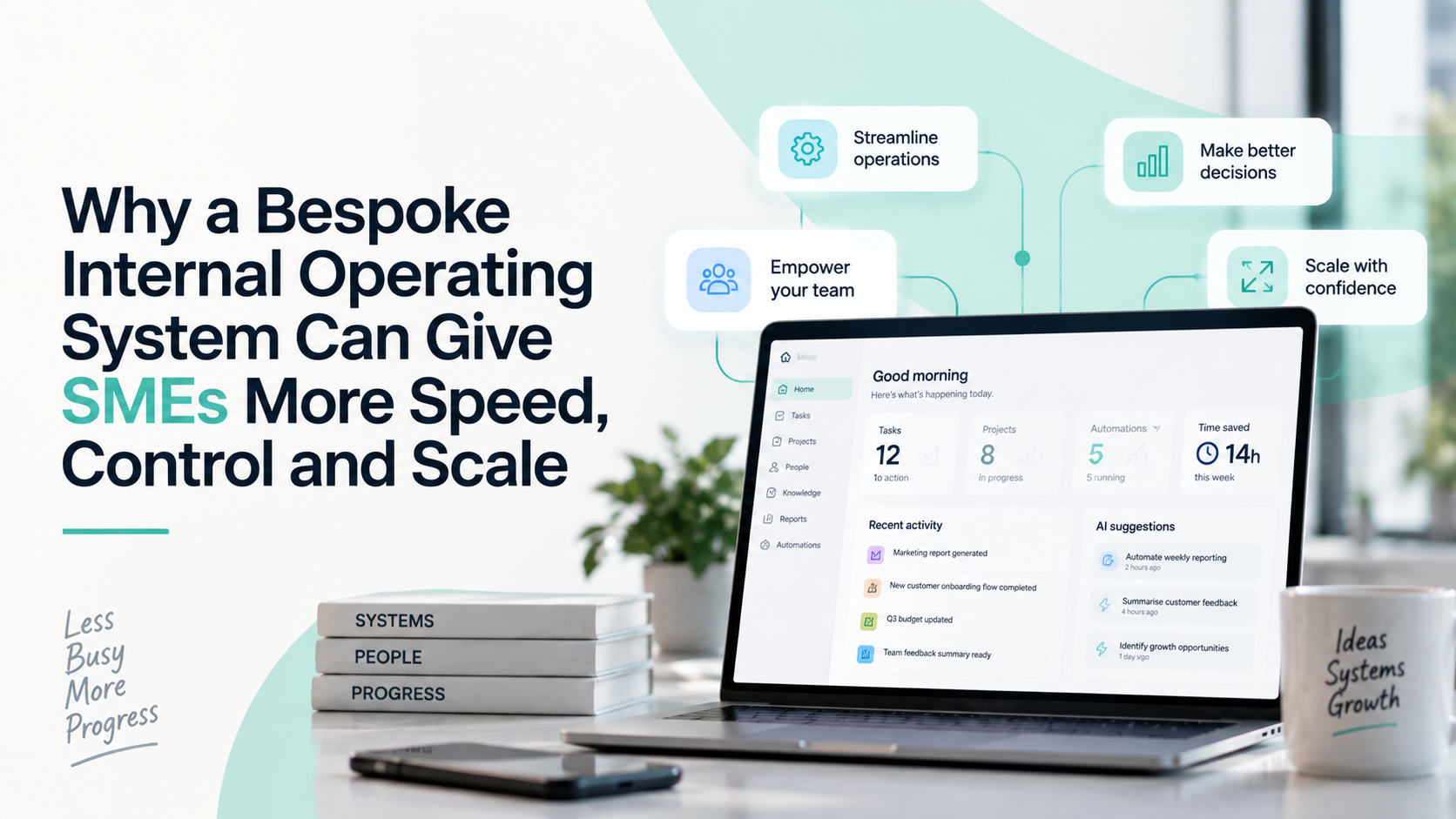
That is the real advantage of a bespoke internal operating system: it pulls the moving parts of a business into one practical structure, then uses AI only where it adds value. In other words, the system stays focused on the job, not on the technology. For SMEs, that can create a cleaner route to efficiency, better decision-making and capacity for growth.
What a bespoke internal operating system actually does
A bespoke internal operating system is not one single tool. It is the way your processes, data, approvals, tasks and automation work together across the business.
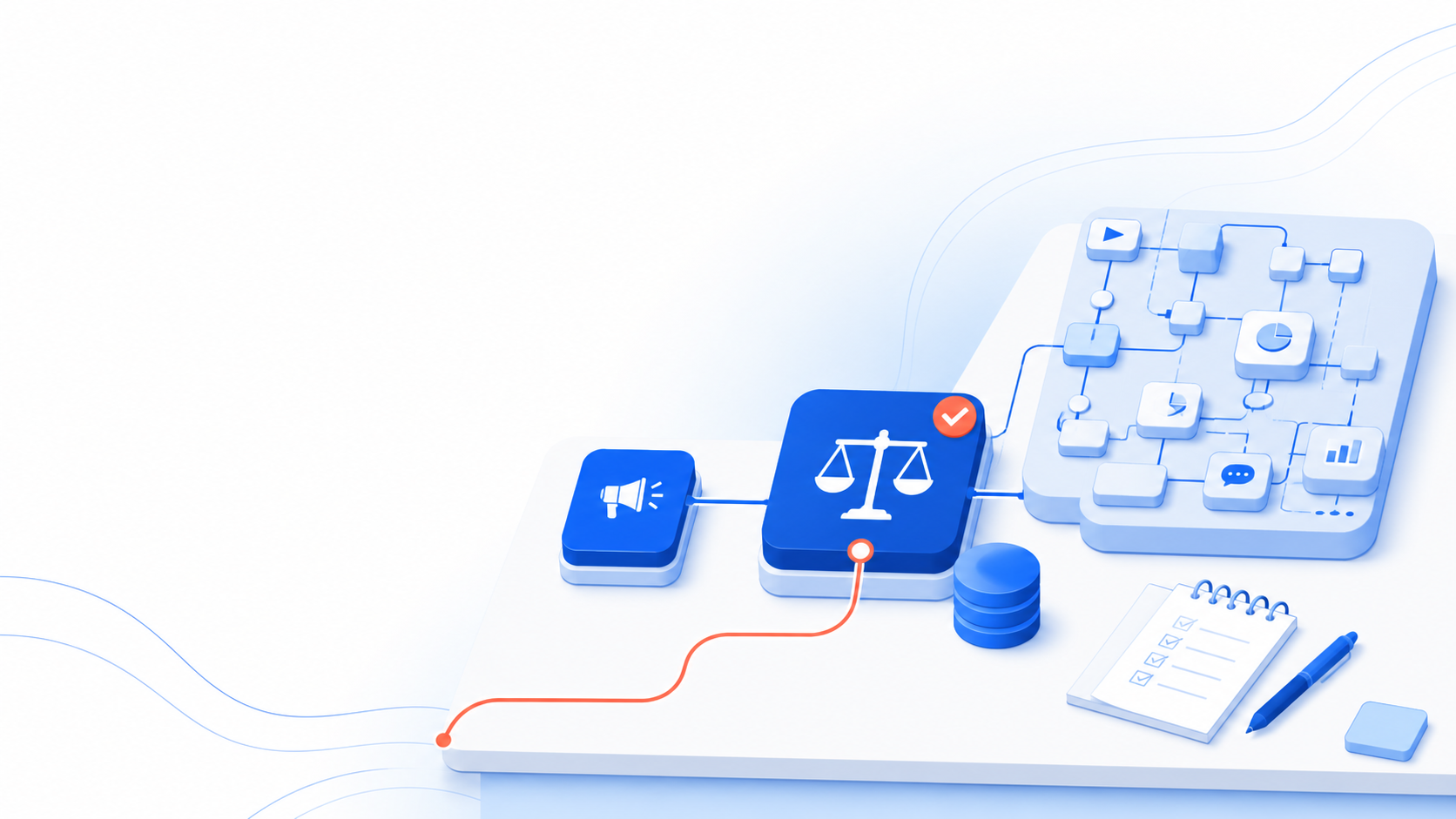
Instead of forcing your team to jump between disconnected apps, spreadsheets and inboxes, you build one internal workflow around how the business really operates. That might include:
- a central place for requests, jobs and updates
- automated handovers between teams
- structured data capture at the point of entry
- alerts, reminders and approvals
- reporting that shows what is happening without manual chasing
The result is a system designed around your business rules, not a generic template.
Why bespoke is often better than buying more off-the-shelf tools
Off-the-shelf software is useful when your process already fits the tool. The problem comes when your business is slightly different, which is common in SMEs. Then teams spend time working around the software, duplicating information or creating side processes that never quite disappear.
A bespoke internal system reduces that friction.
It can mirror the way your business actually quotes, schedules, approves, delivers and reports. That matters because the less your team has to translate their work into the shape of a generic product, the less time gets lost.
It also gives you more control over what is included, what is automated and what still needs human oversight. That is important when some tasks are routine but others need judgement.
Why AI should sit inside the system, not run the whole business
One of the biggest benefits of building your own internal system is that AI becomes a layer, not the foundation.
That gives you flexibility. You can use whatever tool is best for the task: an AI model for drafting or classification, a rules engine for routing, a workflow platform for approvals, or a specialist system for reporting. You do not have to force every problem through one AI product just because it is available.
That matters because not every process needs AI. In many cases, the right answer is simpler:
- use automation for repeatable steps
- use structured logic for clear rules
- use AI for unstructured input, triage, summarisation or drafting
- keep humans involved where risk, nuance or judgement is needed
This AI-agnostic approach is practical. It avoids overengineering and makes the system easier to adapt as tools change.
The real gain is efficiency without losing control
SMEs often want speed, but not at the cost of oversight. A bespoke internal operating system can help with both.
When key tasks are standardised, the business wastes less time on chasing, checking and correcting. When the process is defined properly, fewer things fall through the cracks. When data is captured once and used throughout the workflow, people stop retyping the same information in different places.
That creates efficiency in a very ordinary but valuable way: less manual admin, fewer handoff errors and quicker movement from task to task.
It also gives leadership better visibility. Instead of asking for updates from three different people, you can see where work is stuck, what needs attention and what is ready to move. That is where improved decision-making starts.
Why bespoke systems scale better than ad hoc processes
Growth is often where informal systems start to break.
A process that works for 20 jobs a week may collapse at 50 if it depends on memory, personal habits or one person’s inbox. A bespoke operating system gives you a structure that can absorb more volume without needing the same amount of manual effort.
That does not mean the business becomes rigid. It means the basic workflow is stable enough to handle more work while still allowing exceptions where needed.
For SMEs, that can be the difference between growth that feels controlled and growth that feels chaotic. As demand increases, you can add users, extend workflows and introduce automation in the right places rather than rebuilding everything from scratch.
Where this helps most: practical examples
Accountants
For an accountancy practice, the internal system can organise client onboarding, document requests, deadline tracking and approval workflows.
A bespoke setup can:
- route documents to the right person
- remind clients when information is missing
- flag deadlines before they become urgent
- standardise recurring tasks across clients
- surface work in progress without manual spreadsheet updates
AI can be used selectively, for example to classify incoming documents, summarise notes or draft client communications where appropriate. The core process still sits inside a controlled workflow.
Building firms
For a building firm, the challenge is often coordination. Quotes, site updates, materials, subcontractors, variations and handovers all need to line up.
A bespoke internal operating system can:
- turn enquiries into structured jobs
- track site progress across teams
- manage approvals for variations
- capture issues in one place
- reduce missed updates between office and site
AI may help with summarising notes, sorting incoming requests or drafting job updates, but the main value comes from having one system that supports the full project flow.
Other SME use cases
The same logic applies in many other businesses where work is repeated but not identical every time. That includes professional services, trades, property, logistics and specialist operations.
The pattern is simple: if your team keeps saying, “We need a better way to manage this”, a bespoke internal operating system may be the right answer.
The main advantages at a glance
A well-designed bespoke system can give SMEs:
- more speed through less manual work
- better consistency across processes
- clearer oversight for managers and owners
- fewer mistakes caused by disconnected tools
- a better fit for the way the business actually works
- the flexibility to use AI only where it adds value
- a stronger base for scale as demand grows
The benefit is not just digitisation. It is building an operating model that supports the business, instead of making the business adapt to the software.
Conclusion
For SMEs, the case for a bespoke internal operating system is straightforward: it can create measurable value by improving how work moves through the business.
Used well, it brings together automation, structure and selective AI in a way that saves time, improves decision-making and creates capacity for growth. It is especially useful where off-the-shelf tools create friction, or where the business needs a system that can grow with it.
If you are looking at where AI and automation could make the biggest difference, the best place to start is often not with AI itself, but with the operating system underneath it.