Most businesses know AI matters. Few know where to start. That is especially true with agentic AI for business operations, where the promise is attractive but the practical risks are easy to underestimate. Used well, these systems can handle multi-step work, support decisions and create capacity. Used badly, they can create errors faster than a person can spot them.
For SMEs, the right question is not whether to “do AI”. It is which operational process is worth automating or augmenting, what guardrails it needs, and how to keep control of data, quality and cost. That is the point where practical implementation matters more than hype.
What agentic AI actually does in business operations
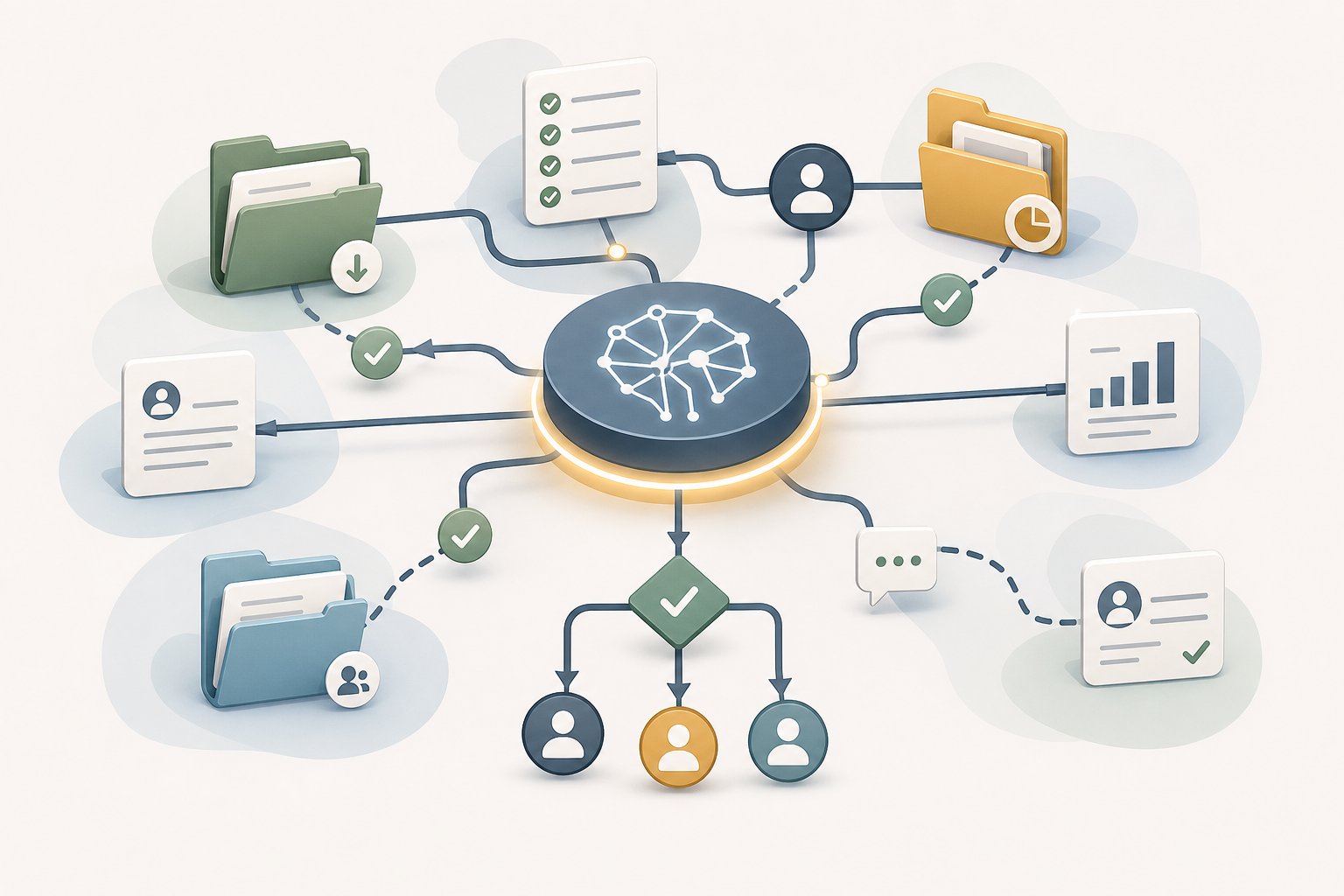
Agentic AI is not just a chatbot answering questions. It is a system that can take a goal, break it into steps, use tools or data sources, and complete parts of a workflow with limited human input.
In business operations, that usually means one of three things:
- gathering information from different systems
- making a recommendation or preparing a draft decision
- carrying out a bounded action, such as creating a task, updating a record or escalating an issue
The useful distinction is that agentic AI is workflow-oriented. It is not there to “be intelligent” in the abstract. It is there to reduce manual effort in a process that already exists.
That process focus matters. If your operation is unclear, inconsistent or full of exceptions, AI will not fix it. It will simply expose the mess more quickly.
The right business processes to start with
The best starting points are processes that are repeated, rule-based, information-heavy and easy to review. For SMEs, that often includes:
- customer enquiry triage
- invoice or document handling
- internal knowledge search
- sales support and lead qualification
- meeting follow-up and task creation
- HR or operations requests with clear policy rules
A good candidate has a few features. It uses information you already hold. It follows a recognisable sequence. It creates delays because people spend time finding, checking or transferring information. And a human can still review the output without rebuilding the whole process.
Poor candidates are usually high-risk or highly ambiguous. Examples include final legal decisions, sensitive employment outcomes, or any process where one mistake has serious consequences and no practical review step exists.
A useful rule is this: if a process cannot be described clearly enough to map as steps, it is probably not ready for agentic AI.
A step-by-step way to implement it inside a business
Implementation works best when it starts with one bounded use case, not a broad AI transformation plan. A sensible approach looks like this.
Define the business problem in operational terms
Be specific. For example: reduce the time spent on inbound customer enquiry sorting, or cut manual effort in processing routine supplier documents. Avoid vague goals such as “improve efficiency”.
Map the current process
Write down each step, who owns it, what systems are used, where decisions are made, and where delays or errors happen. This is where you find whether the issue is AI-shaped or process-shaped.
Set the boundary for automation
Decide what the AI can do, what it can suggest, what must be checked by a person, and what it must never do. This is the control layer. Without it, implementation becomes hard to trust.
Choose the right data sources
Identify the documents, records, messages or knowledge bases the system will need. Prioritise clean, accessible and current sources. If the data is incomplete, the AI will produce weak outputs with confidence.
Design the workflow, not just the model
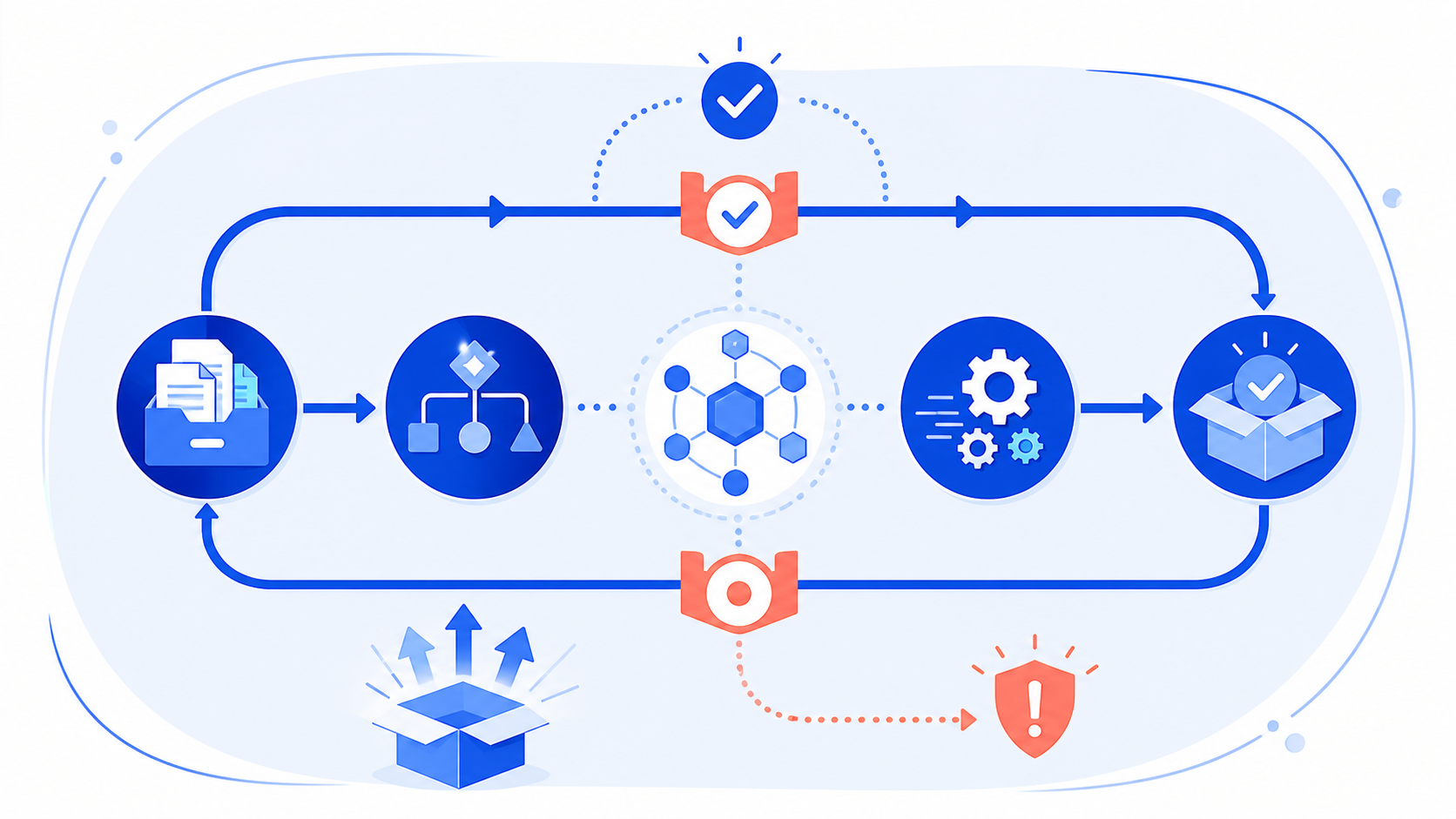
The value usually sits in the end-to-end process. That includes prompts, tool access, review steps, exception handling and escalation routes. A good workflow beats a clever model used badly.
Build a pilot with narrow scope
Start with one team, one process and a limited set of scenarios. Keep the pilot small enough that you can measure quality and fix issues quickly.
Test with real examples
Use actual business cases, not hypothetical ones. Check accuracy, tone, speed, completeness, and how the system handles edge cases or missing data.
Add human review where it matters
For many SME use cases, the best design is human-in-the-loop. The AI prepares, classifies or drafts; the person approves, amends or rejects.
Train the team on the new process
Adoption fails when people do not understand what the system can and cannot do. Give staff clear guidance on when to trust it, when to override it, and how to report issues.
Measure and improve
Track the operational outcome, not just the technical output. That might mean time saved, fewer handoffs, better response times, or improved consistency. Then refine the workflow.
Data protection and access control need to be designed in
If you are using AI inside a business, data protection cannot be an afterthought. You need to know what information the system can access, where it is processed, who can see it and how it is stored.
For SMEs, the practical questions are straightforward:
- What data is needed for the task?
- Is any of it personal, confidential or commercially sensitive?
- Can the use case work with masked, partial or limited data?
- Who has approval to upload, connect or share information?
- What happens if the system pulls in the wrong record or exposes content to the wrong person?
The safest approach is data minimisation. Only give the AI what it needs to complete the task. Restrict access by role. Keep sensitive records out of open prompts where possible. Use approved systems rather than staff copying information into ad hoc tools.
You should also think about retention and auditability. If the AI creates a draft, recommendation or action, there should be a record of what happened, who approved it and what source information was used. That matters for accountability as well as compliance.
Where businesses get into difficulty is treating AI like a convenient shortcut. Convenience is not a control framework.
Quality depends on process design, not just model choice
A common mistake is to assume that a better model automatically means better business results. In practice, quality comes from the whole setup.
The main quality controls are:
- clear instructions
- bounded tasks
- reliable source data
- review thresholds
- exception handling
- logging and feedback
If the task is too broad, quality will drift. If the data is inconsistent, quality will wobble. If nobody reviews outputs, errors will accumulate. If you do not capture feedback, the same issues will repeat.
This is why implementation support matters. The real work is often less about the AI itself and more about making sure the workflow behaves properly in the business environment.
Full examples of how this can work in practice
Example 1: Customer enquiry triage
A small services firm receives enquiries by email. Some are urgent, some are not, and many need routing to the right person.
An agentic AI setup could:
- read the incoming message
- identify the enquiry type
- check the customer record in the CRM
- draft a response or suggest a route
- create a task for the right team member
- escalate anything ambiguous or high priority
A practical implementation would keep the first version narrow. The AI can classify and draft, but a person approves replies for the pilot phase. Over time, routine categories may become more automated, while complex cases remain human-led.
The control point is that the AI should not guess when the email is unclear. It should escalate.
Example 2: Invoice or document processing
A finance team spends time matching supplier invoices against purchase orders and chasing missing fields.
An agentic AI workflow could:
- extract key fields from the invoice
- compare them against the order and supplier record
- flag mismatches
- draft a query for missing information
- route matched invoices for approval
This works best where the business rules are clear. If invoice structures vary widely or the approval chain is inconsistent, the project needs process clean-up before AI can help.
The quality check here is simple: every automated match should be auditable, and every exception should be visible to the team.
Example 3: Internal knowledge support
Staff keep asking the same operational questions: holiday policy, purchasing rules, onboarding steps, or how to request a system change.
An agentic AI assistant can search approved internal documents, summarise the answer and create a task if the request cannot be resolved from policy.
This is often one of the safest early uses because the outputs can be constrained to internal knowledge only. The main risk is stale information, so the content sources need an owner and a review cycle.
The implementation lesson is to connect the AI to approved documents, not to a broad and uncontrolled file collection.
A sensible way to choose support and move forward
For most SMEs, the right approach is practical and measured. Start with one process where the business pain is clear. Check whether the workflow is ready. Put data protection and review rules in place before launch. Then pilot, test and improve.
That is the difference between a useful business tool and a noisy experiment.
If you want to explore where agentic AI could create measurable value in your operations, start with a conversation or an AI opportunity assessment. A good first step is not a big commitment. It is a clear view of which process is worth improving, what should stay human, and how to implement safely.