Most SMEs already have enough operational data to make better calls. The problem is that the data often lives in separate systems, arrives at different times, and still needs someone to reconcile it before any decision is made.
That slows the business down. It also increases the chance that finance, sales and operations each act on a slightly different picture. AI can help by connecting existing data, highlighting what has changed, and surfacing likely priorities faster, while leaving judgment with the people who know the business.
Why more dashboards do not always mean better decisions
A dashboard can show activity without showing direction. If finance, sales and operations each report from their own systems, leaders still have to compare the figures, check which version is current, and decide what to do next. That creates delay, and delay is often where avoidable cost appears.
The issue is usually not that the numbers are wrong. It is that the business still has to do the thinking manually.
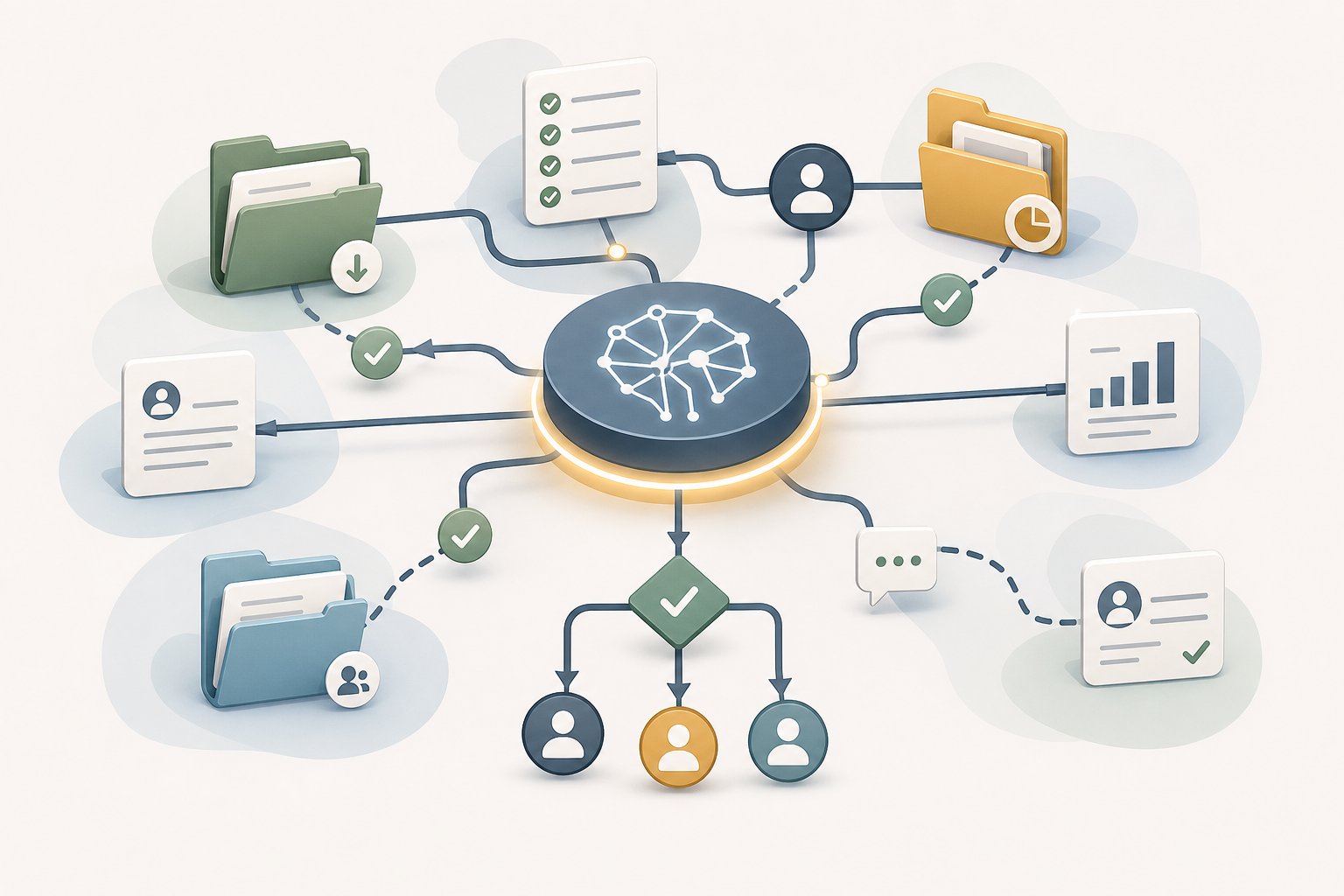
AI is useful when it sits between data sources and decision points. It can scan across records, spot patterns a person would otherwise have to search for, and flag exceptions. Instead of another static report, the business gets a more active layer of support.
For SMEs, that matters because management time is limited. If senior people spend too long reconciling information, they have less time to make commercial decisions.
The kinds of decisions AI can support in an SME
AI is most useful when it supports repeatable decisions that already rely on several inputs. It is not there to replace judgment. It is there to make judgment faster and better informed.
Common examples include:
- Cash and working capital decisions. Identifying when incoming payments, payroll, supplier terms or stock commitments may create pressure.
- Demand and stock decisions. Helping teams see where sales patterns, seasonality or operational delays may affect replenishment.
- Sales prioritisation. Highlighting which leads, accounts or opportunities need follow-up based on recent activity and commercial value.
- Operational scheduling. Showing where capacity is likely to tighten so teams can adjust staffing, production or delivery plans earlier.
- Customer service triage. Flagging cases that need priority handling because of value, urgency or repeated issues.
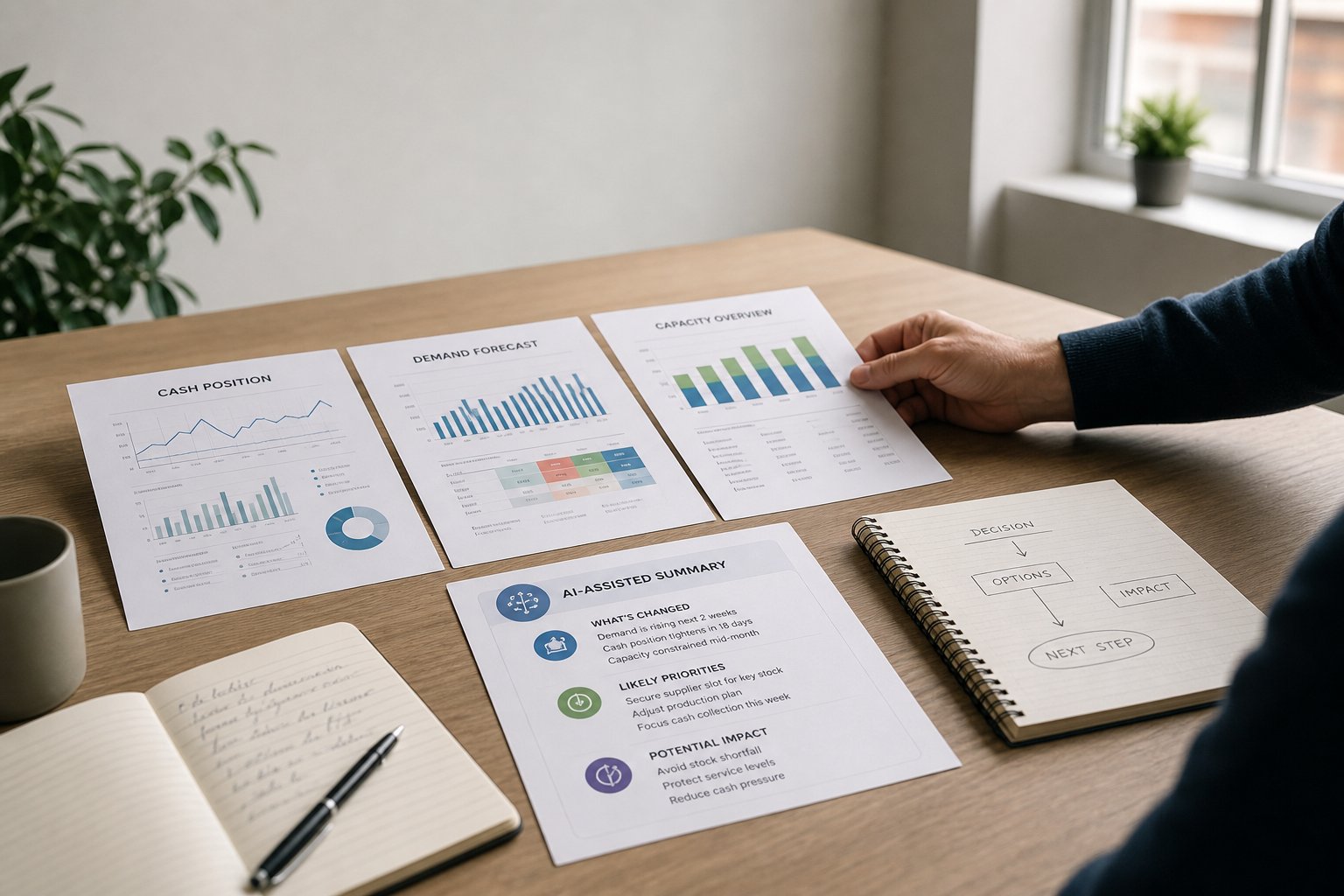
The point is not to make the decision automatically. It is to narrow the field so managers can act sooner, with better context.
How connected data changes the quality of the answer
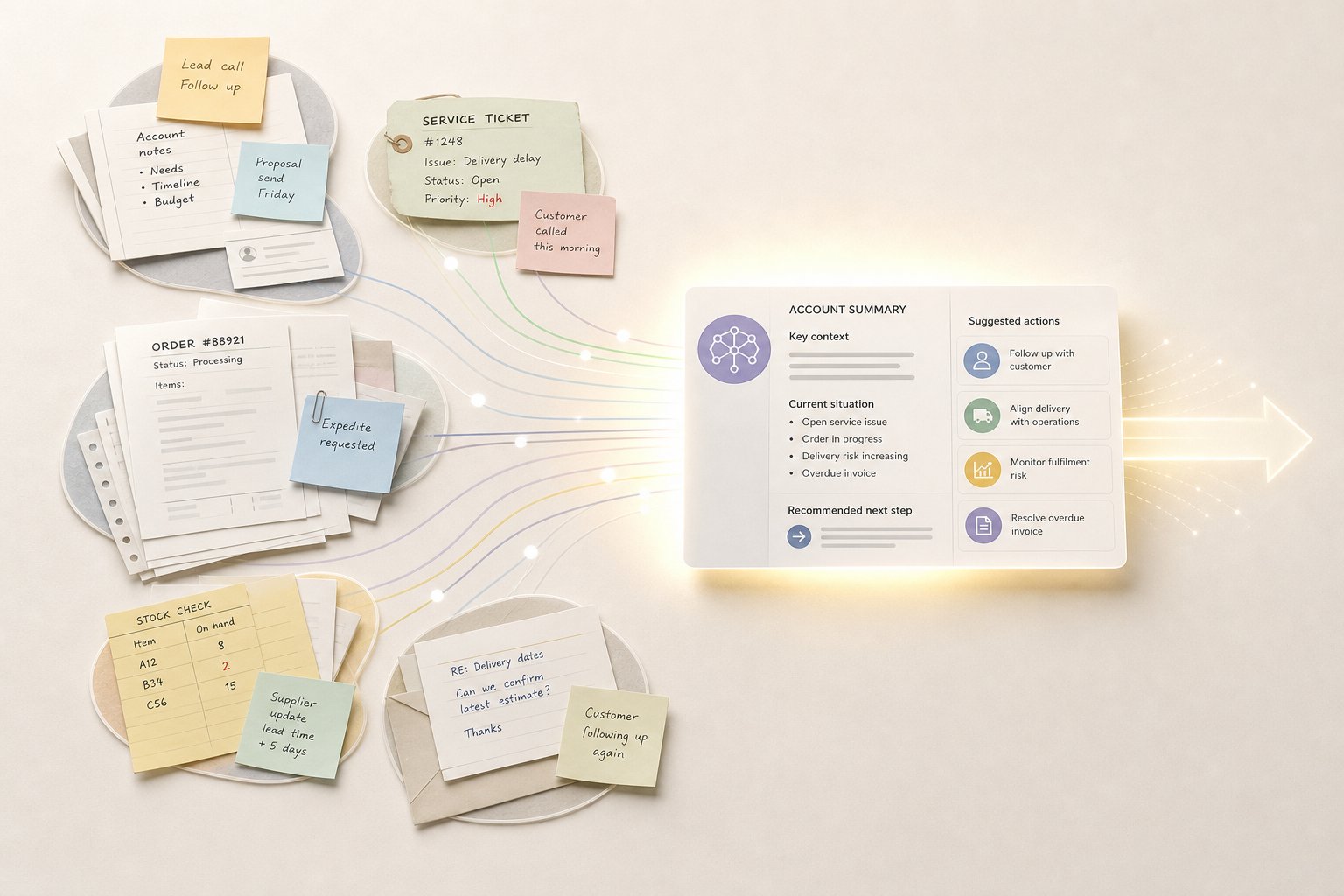
AI works best when it can draw from more than one part of the business. A finance report on its own may show cashflow pressure. A sales pipeline on its own may show expected revenue. Operations data may show capacity constraints. Put them together, and the picture becomes more useful.
That is where the value sits for SMEs. It is not in adding more data. It is in connecting what is already there.
For example, if a business links sales forecasts to stock and supplier lead times, it can see whether expected demand is likely to create a bottleneck. If finance data is connected to purchasing and order progress, leaders can see whether a large outlay is about to land before the cash is in.
Those connections reduce guesswork. They also reduce the risk of each team making decisions in isolation.
Reducing delay and inconsistency in decision-making
Many SMEs do not struggle because people lack experience. They struggle because the decision process is slow, inconsistent or dependent on one person being available.
AI can help by making the first pass faster. It can surface relevant information, apply the same logic every time, and alert teams when a threshold has been crossed. That makes decisions less dependent on memory, instinct or who happens to be in the room.
It also improves consistency. If one manager checks stock levels daily and another checks weekly, decisions will vary. If AI flags the same type of issue in the same way each time, the business gets a more reliable process.
That only works if the underlying rule makes commercial sense. AI should support the way the business wants to operate, not impose a rigid process that removes practical judgment.
Everyday AI use cases that make commercial sense
The strongest AI opportunities are usually ordinary business moments, not headline-grabbing use cases.
A finance leader may want a clearer view of which overdue invoices need immediate follow-up and which customers are most at risk of slipping further. AI can help sort by value, timing and likely impact.
An operations manager may need early warning that demand is likely to outstrip capacity next week. AI can combine order volumes, staff availability and production constraints to flag the pressure earlier.
A business owner may want one view of sales momentum, cash position and delivery performance before approving new spend. AI can bring those signals together so the decision is based on the business as it is now, not as it was at the last meeting.
In each case, the aim is the same. Save time, improve decision-making and create capacity for growth without adding another layer of admin.
Questions to ask before introducing any AI layer
Before adding AI, it helps to be clear about the decision you are trying to improve.
Which decision matters most commercially right now?
Start with the point where a faster or better decision would matter most to cash, margin, customer service or capacity.
Which data sources already exist?
The best place to begin is usually with systems you already use, rather than creating a new data project.
Where does delay happen today?
Look for the hand-off between teams, the manual reporting step, or the person who always has to chase information.
What should AI do, and what should people still decide?
AI can surface, sort and flag. People should still make the final call where commercial judgment matters.
How will the output fit into everyday workflows?
If the insight appears in a separate tool nobody uses, it will not improve decision-making for long.
What would success look like in practice?
For most SMEs, the aim is not more technology. It is fewer delays, fewer errors and better use of time.
Start with one decision point, not a full AI programme
For most SMEs, the best first step is not a company-wide AI programme. It is one important decision point that already causes friction and has a clear commercial impact.
That might be cash control, demand planning, sales follow-up or operational scheduling. Choose one area, connect the relevant data, and test whether AI can help people make the decision sooner and with less effort.
That approach keeps the project practical. It also makes it easier to see whether the AI layer is creating measurable value before you scale it further.
What matters most for SMEs considering AI
If your business already collects data but still relies on gut feel, the opportunity is usually not more reporting. It is better connection between data, people and decisions.
Start with one decision that matters commercially, then look at where AI could reduce delay, improve consistency and support the team without adding admin. For many SMEs, that is the difference between having information and actually using it well.