Most SMEs do not have a technology problem first. They have a consistency problem.
Work gets done, but it relies on people remembering steps, chasing updates, re-keying information and making judgement calls that should already be baked into the process. That is where an SME operating system matters. It gives the business a reliable way to move work from one stage to the next, with clear ownership, visible handoffs and fewer gaps.
AI fits into that picture best as a support layer, not a standalone project. Used well, it can reduce manual effort inside repeatable processes, surface what needs attention and help teams work in the same way more often. Used badly, it adds another layer of complexity to a process that was not clear enough in the first place.
What an SME operating system means in practice
An SME operating system is not software in the narrow sense. It is the way the business runs day to day.
It covers how work enters the business, how it is prioritised, who owns each stage, how information moves between people and where decisions get made. In a well-run SME, that system might sit across a CRM, shared inboxes, project tools, spreadsheets and finance workflows. The point is not the tools themselves. The point is that the business works in a repeatable way.
For founders, directors and heads of operations, the test is simple:
- Can people see what is happening now?
- Do handoffs happen cleanly?
- Are tasks completed the same way each time?
- Can you tell where work slows down or breaks?
If the answer is no, AI will not fix the underlying issue. It will only make the weaknesses more obvious. A useful SME operating system comes first. AI then supports the parts of that system that depend on repetition, pattern spotting and routine decisions.
Where AI adds value inside repeatable processes
AI has the most value when a process already exists, but takes too much manual effort to keep it moving.
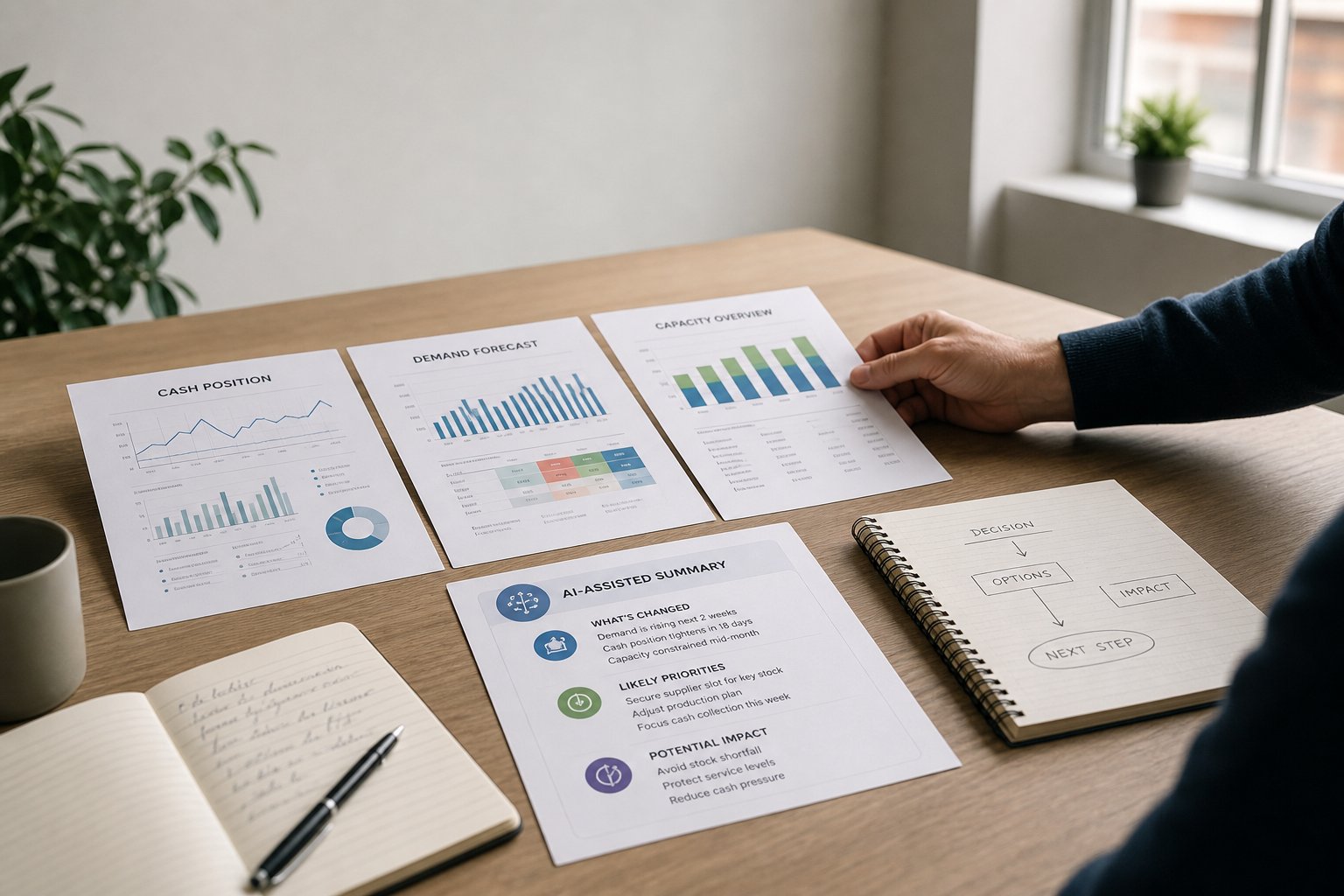
That might include sorting incoming enquiries, drafting first responses, extracting key details from documents, summarising meetings, classifying requests, flagging exceptions or preparing information for review. In each case, AI is not replacing the process. It is helping the process happen more consistently.
The practical gain is usually one of three things:
- less time spent on repetitive admin
- fewer missed steps in routine work
- faster handoffs between teams
That matters because many SME bottlenecks are not dramatic failures. They are small delays and inconsistencies that accumulate. A quote is sent late because the right detail was not captured. A customer handover goes wrong because notes are incomplete. A payment query sits unresolved because nobody knows who owns the next step.
AI can support those repeatable processes if the inputs, rules and escalation points are clear. If they are not, the output may look efficient at first but still create rework later.
The handoffs that usually break down
The most common problems in SME systems do not happen inside one team. They happen between teams.
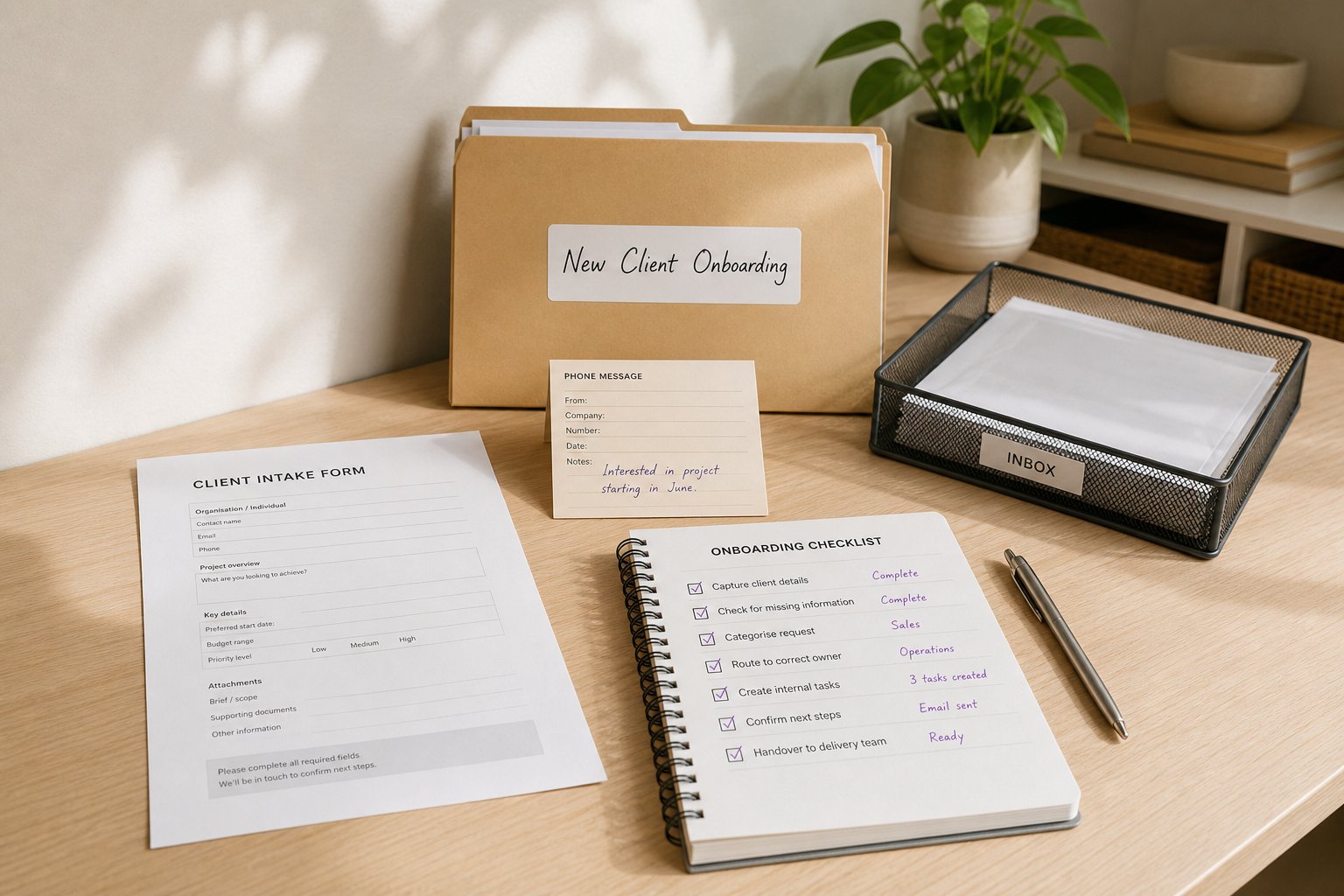
Sales passes a deal to delivery, but the brief is incomplete. Operations receives an update, but not the decision behind it. Finance needs information that is stored in email threads. A customer issue is logged, but no one owns the next action. These gaps are where time is lost and mistakes multiply.
AI can help at these handoff points, but only when the process has defined what “good” looks like. For example, it can:
- prompt people to capture missing information before a handover moves on
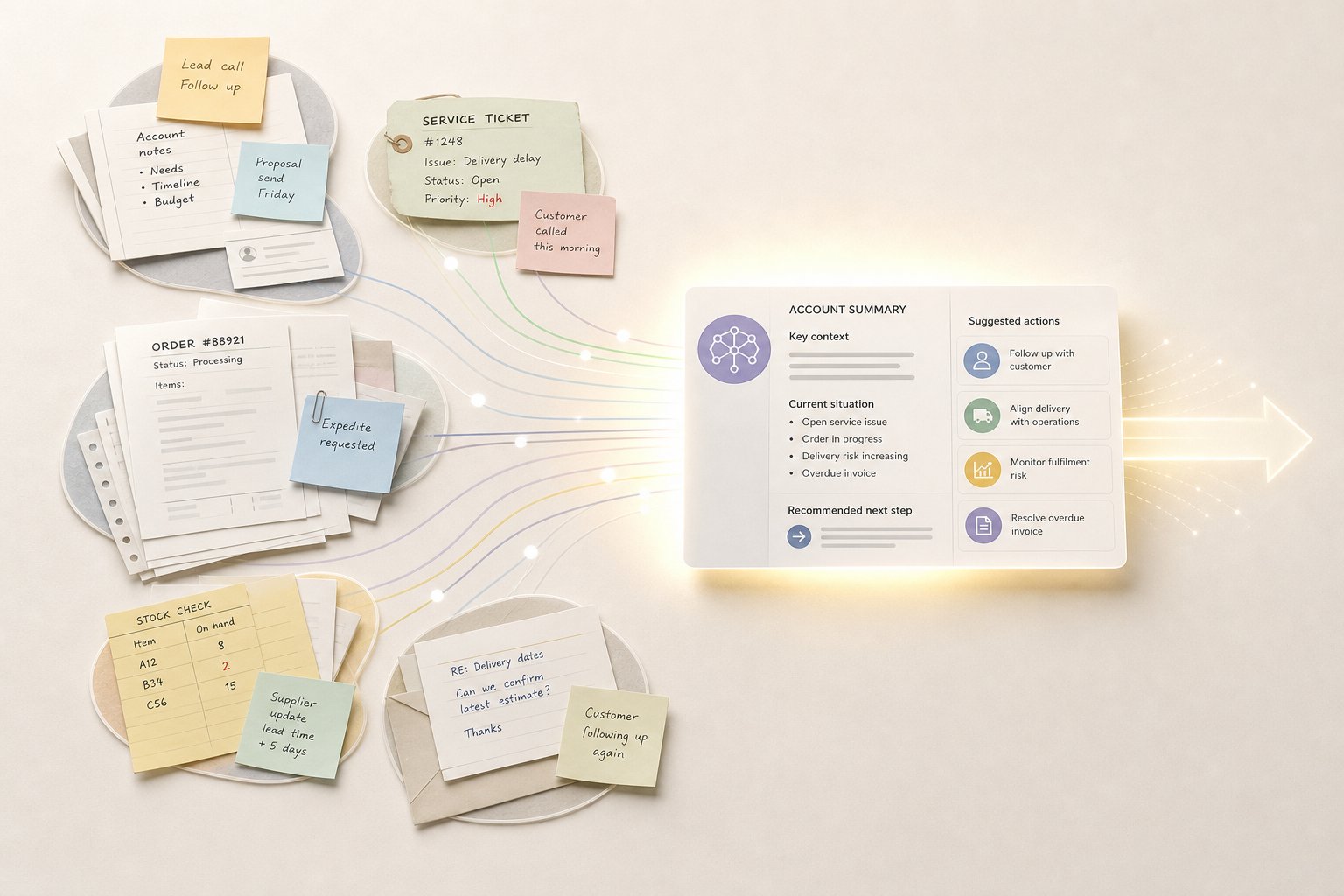
- summarise a call into a standard format for the next team
- classify requests so they reach the right person sooner
- highlight unusual cases that need human review
The value is not in making every handoff automatic. The value is in making the handoff visible and structured. That is how you reduce rework and avoid the familiar “I thought someone else was dealing with it” problem.
How to connect people, data and workflows without overcomplicating things
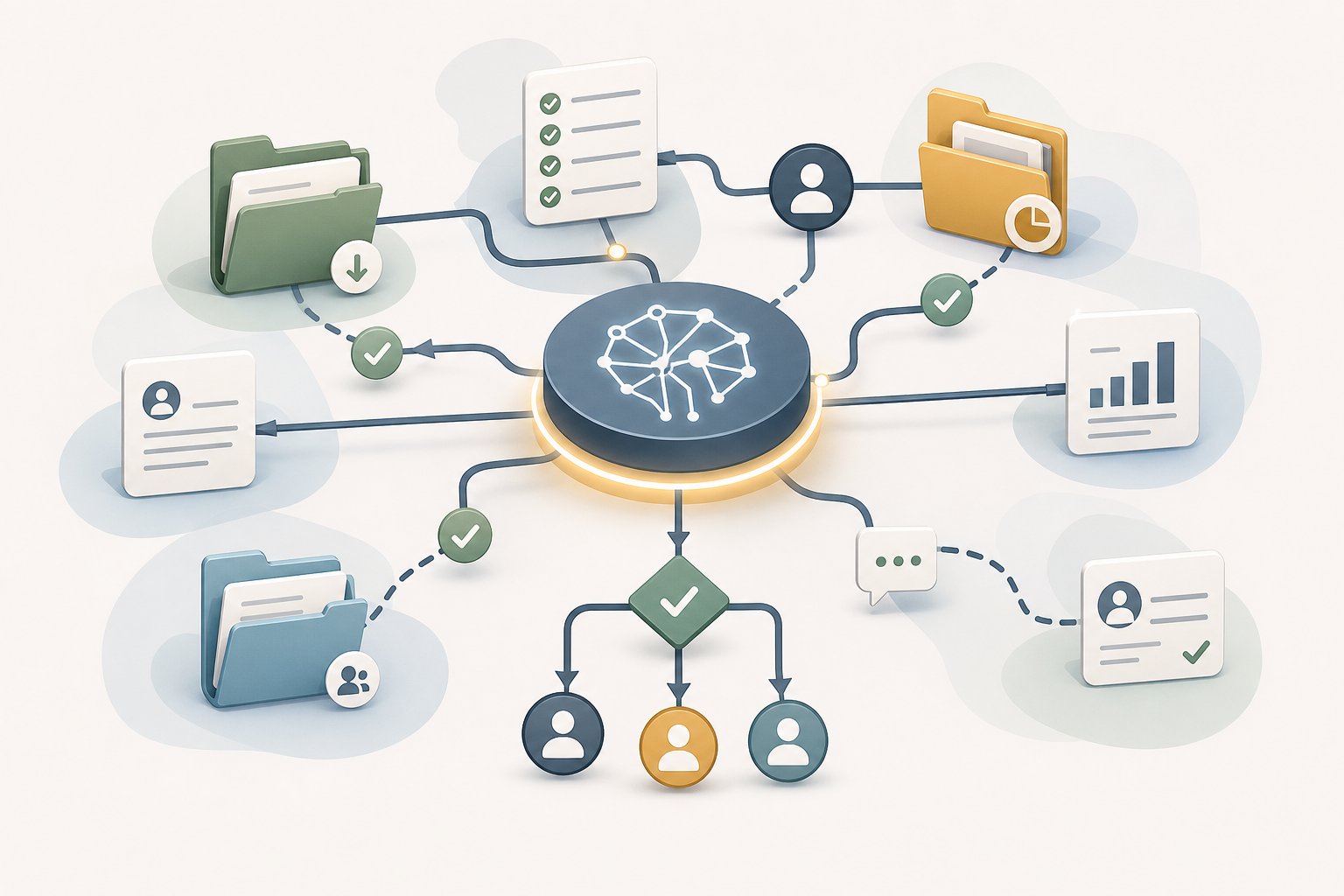
A strong operating system depends on three things working together: people, data and workflow. Most SMEs already have all three. The issue is that they are often connected loosely, not deliberately.
People need to know what they are responsible for. Data needs to be captured once, in a usable format. Workflows need to move information from one stage to the next without unnecessary manual chasing.
AI can sit across that setup in a practical way. It can read, summarise, classify, draft or route information. But it should still respect the business logic underneath. If a human needs to approve something, the workflow should make that obvious. If a record needs to be updated in a system of record, AI should support the update rather than create another version elsewhere.
A sensible implementation usually follows this order:
- Map the process as it actually works today.
- Identify where people spend time on repetition, chasing or transcription.
- Define the rule, owner or decision point that should govern each step.
- Add AI where it reduces manual effort without weakening control.
- Review the output with the people who use the process every day.
That sequence matters. It keeps the business-led process in charge and stops AI becoming a bolt-on that only the technical team understands.
A simple way to judge whether your system is ready for AI
Not every process should be automated or AI-supported straight away. Some are too inconsistent, too low-volume or too dependent on judgement.
A process is usually ready for AI support when most of these are true:
- the same steps happen often
- the input format is broadly similar
- the output can be checked easily
- there is a clear owner for exceptions
- delays or errors create real cost
If a process changes every time, starts with incomplete information or depends on tacit knowledge that only one person holds, it needs more standardisation first.
That is where an AI consultancy for SMEs can be useful. The right role is not to force AI into every workflow. It is to help the business identify where AI can create measurable value, where a process should be simplified first and where human judgement should stay central. In practice, that keeps implementation focused, phased and tied to outcomes that matter to the business.
Building from one process to a wider operating model
An SME operating system does not need to be redesigned all at once. In fact, trying to do everything at once usually creates more confusion, not less.
The better approach is to start with one process that is repeated often, visible enough to measure and painful enough to justify improvement. Improve the workflow, clarify ownership, then introduce AI support where it reduces manual effort and improves consistency. Once that pattern works, apply it to the next process.
That is how AI becomes part of the operating model rather than a series of disconnected experiments. The business keeps control. Teams get clearer workflows. Managers get better visibility. And the organisation gains capacity without adding unnecessary complexity.
The practical takeaway for SME leaders
If your business wants AI to do useful work behind the scenes, start with the system before the tool.
The real question is not “What can AI do?” It is “Which parts of our operating model would benefit from more consistency, fewer handoffs errors and less manual effort?” Once that is clear, AI can support the business in a measured way, process by process, without turning operations into a technical project.
If you want help identifying where AI could create measurable value in your SME, start with a conversation or an AI opportunity assessment. The aim is to find practical solutions that save time, improve decision-making and create capacity for growth.