Approvals often look like a people problem, but in SMEs they are usually a workflow problem. Work stalls because a request arrives without enough context, reaches the wrong person, or needs the same information chased again before anyone can sign it off.
AI can take pressure off that process. Used well, it prepares the information a decision-maker needs, routes the request to the right person and keeps the next step visible. For SMEs building practical AI for SMEs use cases or strengthening their SME operating systems, that makes approvals a sensible place to start.
Why approvals slow the business down
Most delay sits around the decision, not inside the decision itself. A budget holder, manager, client, supplier or compliance reviewer may only need a minute to say yes or no. The request can still sit untouched for days if the background information is incomplete or the route to approval is unclear.
The slowdown is usually caused by variation. One request comes by email, another through chat, another in a spreadsheet. Different approvers want different detail. Staff then spend time reformatting the same information, chasing attachments and answering the same follow-up questions.
That is why slow approvals are a process issue first. If the workflow does not give the approver enough context in a consistent way, speed depends on memory, goodwill or who notices the message first.
What AI can prepare before a request reaches sign-off
A useful approval request is not just a form. It is a decision pack. AI can help assemble that pack before it reaches the approver.
In practice, that might mean summarising a purchase request, pulling key points from an email thread, or drafting a short briefing note from supporting files. It can also flag gaps such as a missing budget code, an out-of-date contract version, or a reviewer who has not yet replied.
For SMEs, that is where AI creates measurable value without taking over judgement. People spend less time turning raw information into something a manager can act on. The approver gets the context needed to decide, instead of hunting through folders or messages.
A workable split is simple:
- AI gathers and formats the context.
- A person makes the approval.
- The workflow records what was reviewed.
That keeps the process quick without losing accountability.
How to reduce back-and-forth before the approval lands in an inbox
The most frustrating delays usually come from incomplete requests. A manager asks for more detail, the requester sends a partial answer, and the thread grows until nobody is sure which version is current.
AI can interrupt that pattern before the request goes out. It can prompt the requester to complete missing fields, spot contradictions in figures, or compare a request with a previously approved version. It can also hold the item until the basic inputs are present, rather than sending an approver a half-finished task.
This is especially useful in common SME workflows:
- spending approvals
- supplier onboarding
- contract review
- hiring requests
- marketing or content sign-off
- customer exception approvals
The gain is not only speed. Fewer incomplete requests means fewer interruptions for the approver and less rework for the team submitting the item.
A practical example
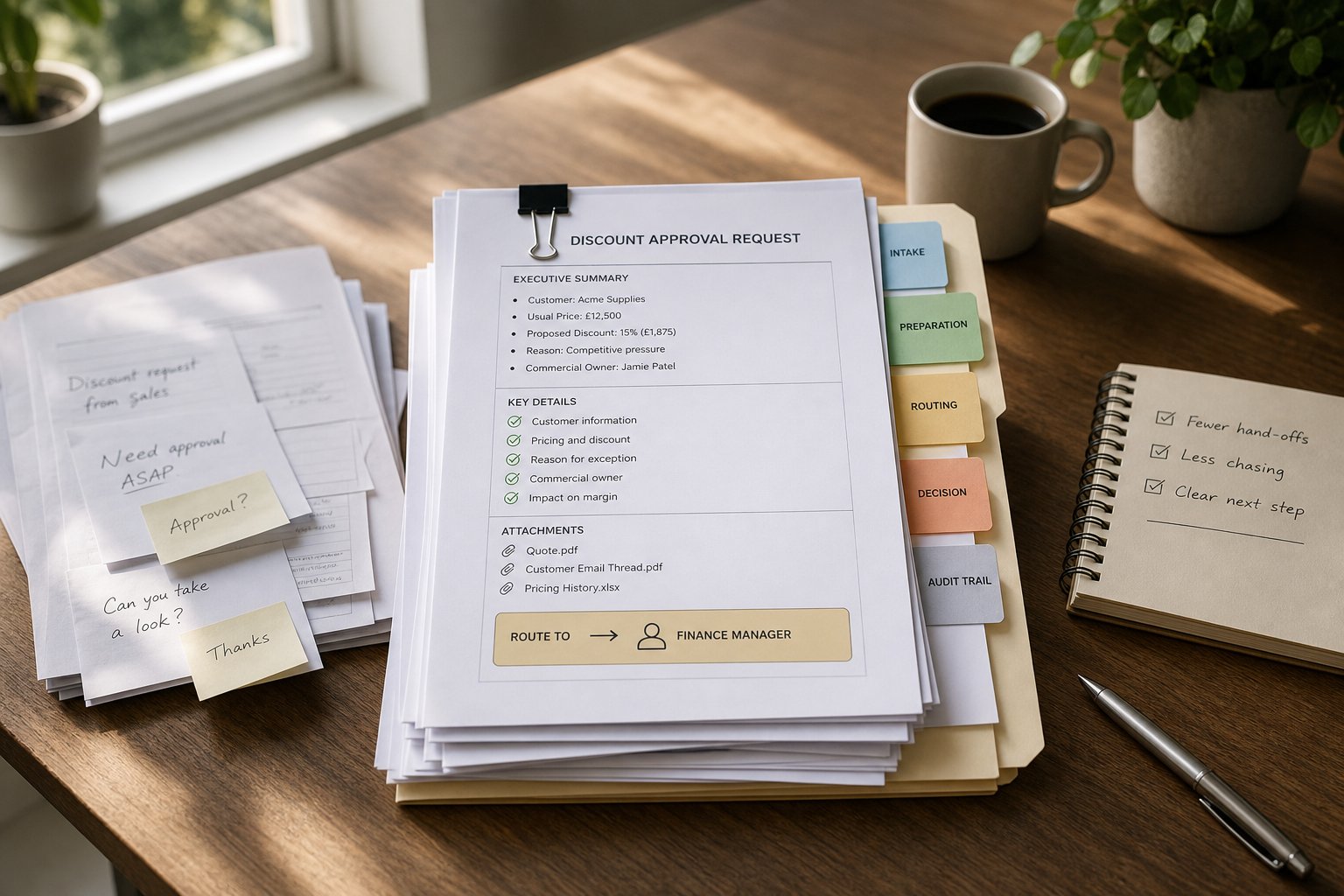
A sales manager wants approval for a customer discount. AI can check that the request includes the customer name, the usual price, the proposed discount, the reason for the exception and the commercial owner who will sign it off.
If one field is missing, the requester sees it before the manager does. The approver receives a cleaner pack, and the request is less likely to bounce back for clarification.
Where routing matters more than automation
Not every slow workflow should be automated end to end. In some cases, the real issue is poor routing. The request reaches the wrong person, or reaches the right person too late.
AI can support routing by reading the content of the request and identifying who should see it next. A request over a set amount might go to a finance lead. A supplier change might go to operations first, then procurement. A customer refund may need a different route from a goodwill credit note.
That routing layer matters because it cuts out informal forwarding. It also makes the process less dependent on who is available or who remembers the usual path. In a small business, that often matters more than trying to automate every step.
It is also where SMEs can build a more reliable operating rhythm. Requests move according to rules, not inbox habits.
How to keep control while improving speed
Approval workflows fail when speed becomes the only goal. SMEs still need controls around spend, risk, compliance and authority levels. AI should support those controls, not weaken them.
That means deciding where AI is allowed to act and where it is only preparing the ground. High-risk decisions may still need a named human approver. Sensitive data may need to stay out of general-purpose tools. Some workflows may be suitable for AI support only at intake and preparation, not at decision stage.
A sensible control model looks like this.
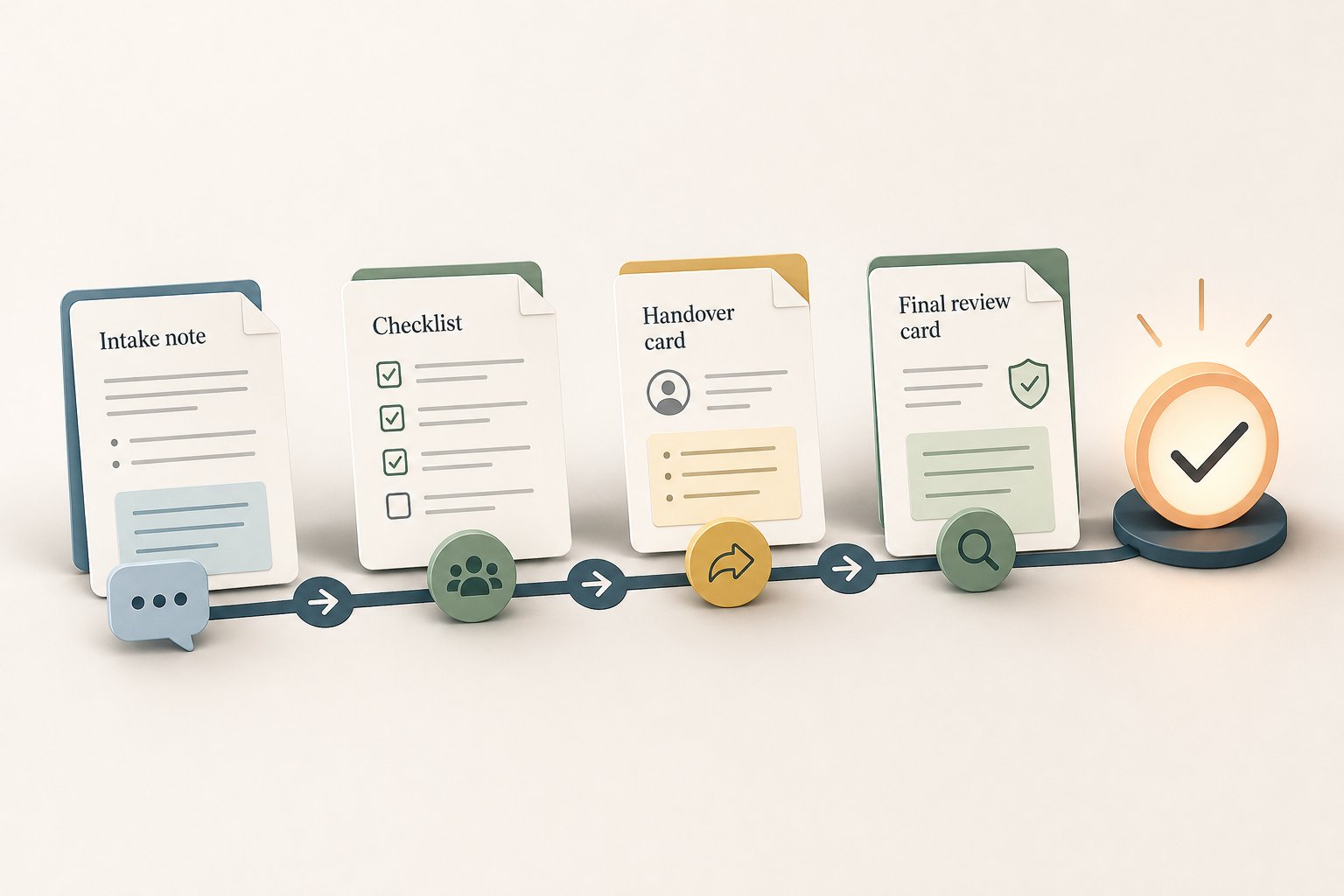
| Workflow stage | AI support | Human control |
|---|---|---|
| Request intake | Check required fields and flag gaps | Confirm the request is valid |
| Preparation | Summarise documents and gather history | Review the pack |
| Routing | Send the item to the right approver | Set approval rules |
| Decision support | Highlight relevant factors | Approve, reject or amend |
| Audit trail | Log what happened | Review exceptions |
That balance is what makes AI useful in SME operations. It speeds up the process without changing who owns the decision.
How to measure whether the process is actually better
If you want measurable value, do not rely on the feeling that things are moving faster. Track the parts of the workflow where time is being lost.
Start with a small set of measures:
- average time from request submission to approval
- number of times a request is sent back for more information
- number of hand-offs before sign-off
- how often requests are routed to the wrong person
- time managers spend chasing context
These measures show whether AI is cutting waiting time or just moving the effort around. They also make it easier to see which approval type is worth tackling first. A high-volume, low-risk workflow is usually the best starting point.
If the numbers improve, the benefit reaches beyond the approval itself. Faster sign-offs create capacity across the business because purchasing moves sooner, projects do not stall, and managers spend less time on administrative chasing.
The smallest AI change can unlock the biggest workflow gain
The best AI opportunities in approval-heavy processes are usually the modest ones. Prepare the information. Route the request correctly. Catch missing details before they slow the workflow. Keep the human decision where it belongs.
That is often enough to make a slow process noticeably better. For SMEs, the win comes from removing friction between people and decisions, not from trying to automate judgement out of the process.
If you want to find the approval workflows worth tackling first, a short conversation or AI opportunity assessment can show where practical solutions could save time and create capacity.