Retail stock problems are often not just stock problems. They are data problems.
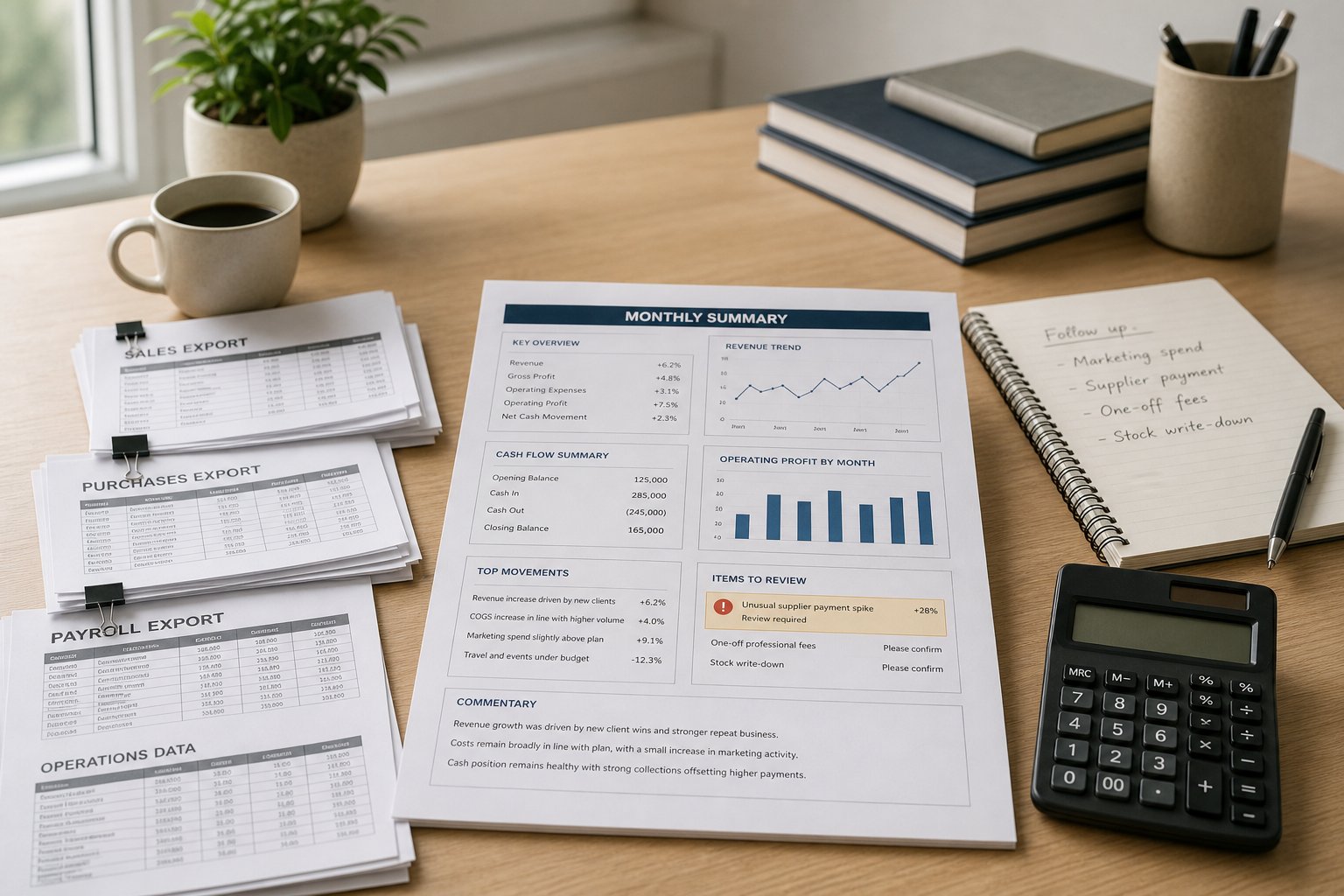
A retailer can have sales in one system, inventory in another, supplier lead times in a spreadsheet and customer behaviour sitting in search, basket and promotion data that nobody is joining up quickly enough. By the time someone reviews the numbers manually, the pattern has often already shifted. AI can sit between those systems and turn scattered signals into earlier, better stock decisions.
For retail SMEs, the goal is not more dashboards. It is fewer stock errors, less waste and more confidence in what to reorder, when to reorder and where to hold stock.
Why stock issues usually start with disconnected data
Most small retail teams do not have a demand problem in isolation. They have a visibility problem.
If sales data is reviewed separately from stock on hand, replenishment history, seasonality and promotions, it becomes difficult to tell whether a product is slowing because demand has genuinely fallen or because stock was not available when customers wanted it. The same issue appears in reverse: a product can look healthy in a spreadsheet while sell-through is weakening in real time.
Manual review also tends to lag behind the business. A stock controller may notice a trend only after a weekly report is pulled. An ecommerce manager may see basket behaviour before the buying team sees it. A store manager may know a line is moving in one location, but that insight may never reach replenishment decisions in time.
AI is useful here because it can scan multiple signals together and flag patterns earlier than a human reviewer who is working from static reports.
What AI can connect across sales and inventory
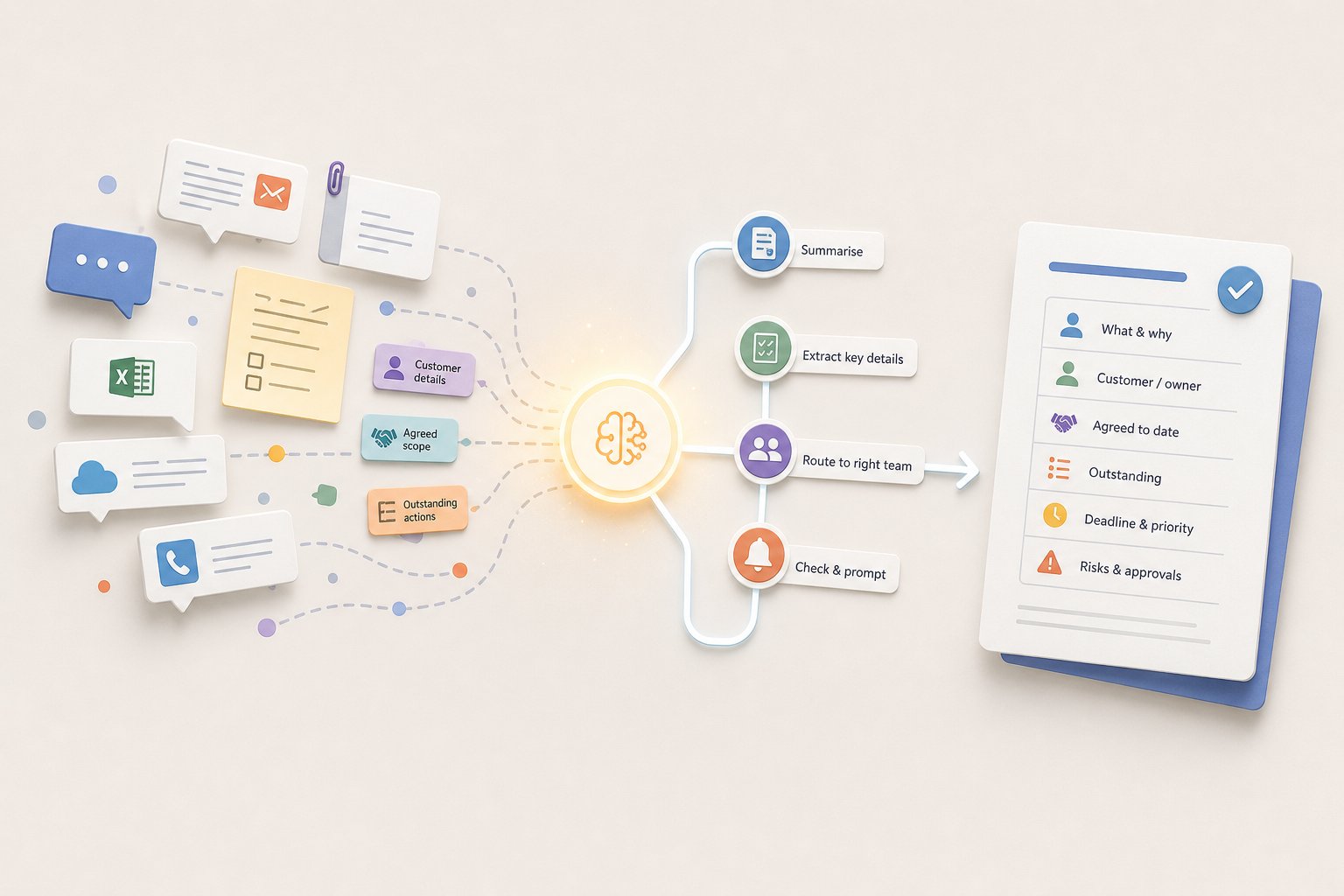
AI works best in retail when it acts as an intelligence layer, not a replacement for the systems you already use.
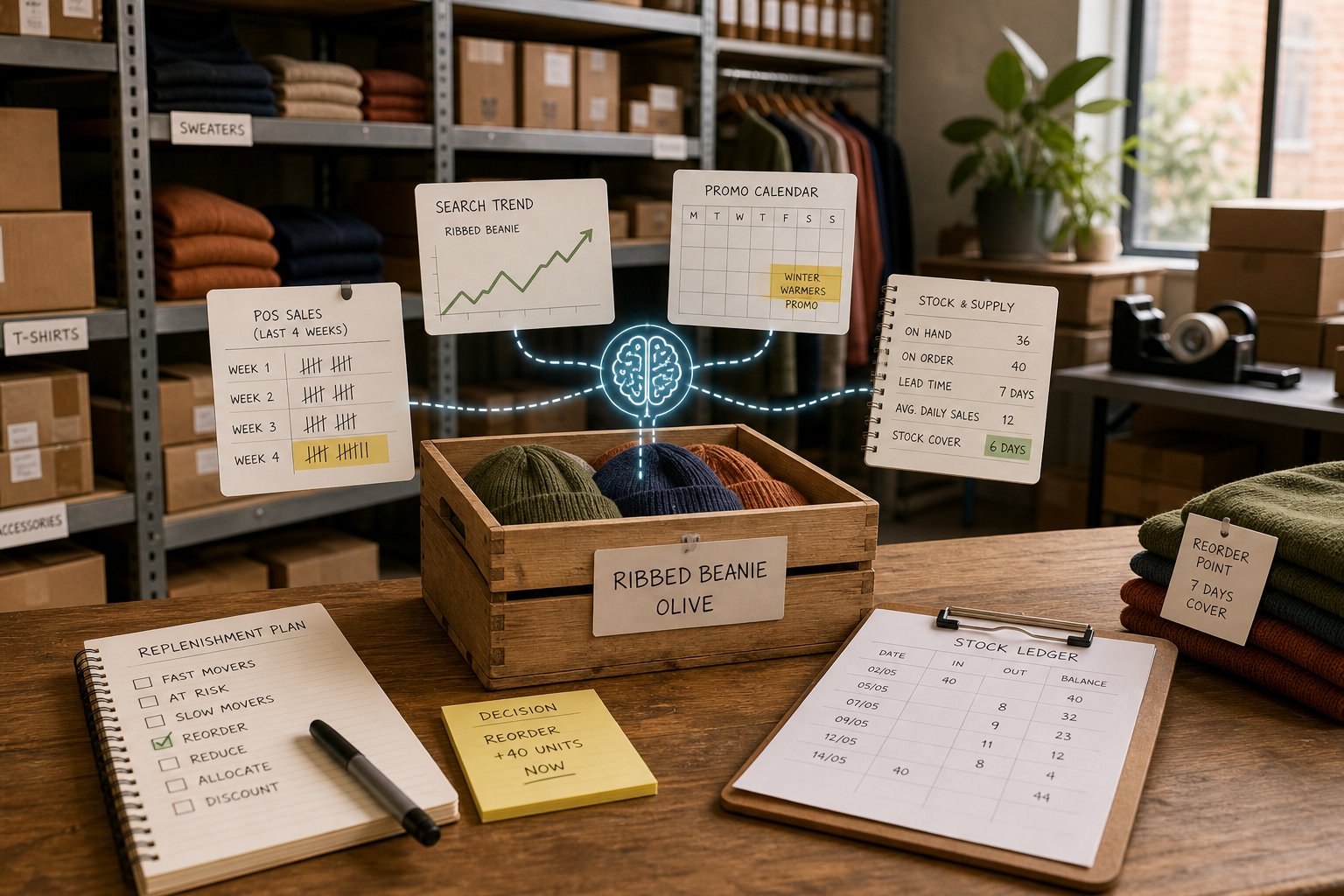
In practice, it can bring together:
- sales by product, channel and location
- current stock levels and stock cover
- purchase order status and supplier lead times
- product margins and clearance risk
- promotion calendars and price changes
- website search, browse and basket behaviour
- returns data and cancellation patterns
- location-specific demand, where the same product performs differently by store or fulfilment point
Once those signals are connected, the retailer can move from reactive checking to earlier decision support. For example, if a product is selling through faster than usual, AI can highlight the risk before stock runs low. If a line is repeatedly reordered but still ends up overstocked, AI can surface the pattern and suggest that the buying rule needs adjusting.
For SMEs, that matters because the business rarely has the time to inspect every line manually. AI can narrow the review to the products, stores or categories most likely to need action.
Practical demand signals that are worth connecting
Not every signal deserves the same weight. A useful AI setup focuses on the data that actually changes stock decisions.
The most practical demand signals usually include:
- recent sales velocity compared with the product’s normal pattern
- search frequency for a product that is not yet converting
- basket additions that do not turn into purchases
- repeat purchase timing for consumable or replenishable items
- regional differences in sell-through
- the effect of promotions on demand spikes
- return rates that suggest a product is not fitting customer expectations
These signals become more useful when they are read together. A product with modest sales but rising search interest may need attention before the spike appears in revenue figures. A product with strong sales but high returns may not need more stock at all. It may need better product content, sizing or fulfilment handling.
AI can help separate genuine demand from noise, but it still needs sensible rules. A small retailer does not benefit from complex modelling if the business cannot act on the output. The best setup is the one your team can use to make a stocking, buying or allocation decision the same day.
How AI supports replenishment without creating more admin
A good retail operating system should reduce work, not add another reporting layer.
That is where AI for SMEs can be especially useful. Instead of asking teams to interpret more spreadsheets, it can support replenishment by:
- flagging fast-moving lines before they hit low stock
- highlighting slow-moving stock before it becomes clearance stock
- suggesting reorder quantities based on recent demand patterns and known lead times
- spotting when a product is likely to miss a reorder window
- recommending where stock should be allocated if one location is outperforming another
The benefit is practical. Buyers and stock controllers spend less time reacting to yesterday’s numbers and more time on decisions that protect margin and availability.
There is a caveat. AI only improves replenishment if the underlying data is clean enough to trust. If product codes are inconsistent, stock counts are inaccurate or lead times are unrealistic, the output will be weaker. In that case, the first AI opportunity is often data hygiene and process consistency, not forecasting sophistication.
How to reduce overstock and stockouts at the same time
Retailers often treat overstock and stockouts as separate issues, but they are usually two sides of the same planning problem.
Overstock ties up cash, space and attention. Stockouts lose sales and weaken customer confidence. AI can help balance the two by giving the business earlier visibility into demand shifts and a clearer view of where the real bottleneck sits.
A useful approach is to ask three questions:
- Which products are moving faster or slower than their normal pattern?
- Which of those products are at risk because of lead times, seasonality or promotion timing?
- Which decisions can we change now: reorder, reduce, reallocate, discount or hold?
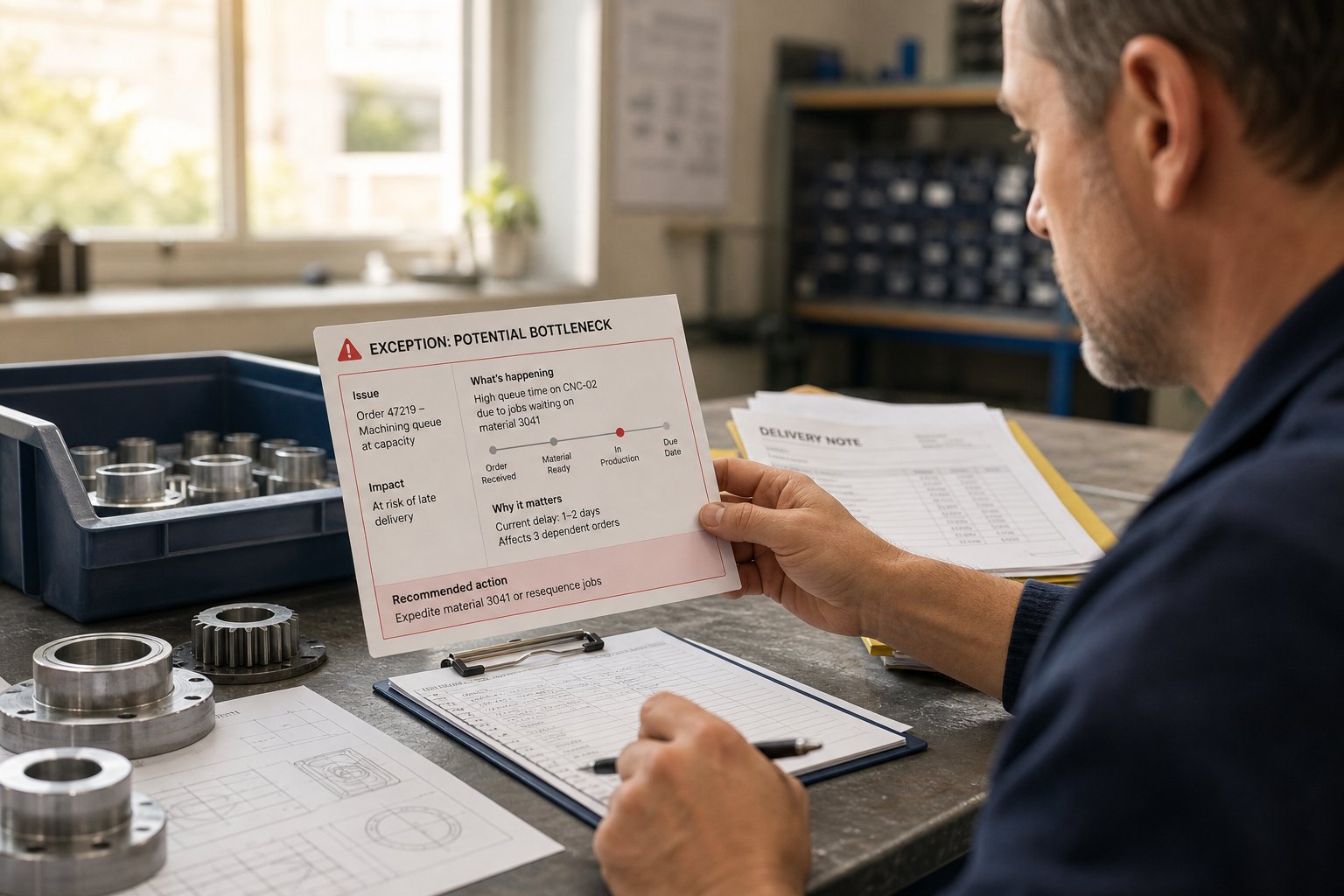
That is more commercially useful than a generic forecast. It turns AI into a decision support layer that helps the team choose between action paths, rather than just producing another number to review.
For many SMEs, the savings come from avoiding small but frequent mistakes: ordering too much of the wrong line, missing a reorder point on a core product, or failing to move stock between channels before a problem becomes visible.
A realistic first step for a retail SME
The safest way to start is with one category, one decision and one measurable outcome.
Choose a narrow pilot where the business already feels pain. That might be a product range with frequent stockouts, a category that regularly goes into markdown, or a line where sales patterns are easy to track. Then connect the minimum data needed to improve one decision, such as replenishment timing or reorder quantity.
A sensible pilot usually has three parts:
- a clear business problem, such as reducing stock errors in one range
- a defined data set, such as sales, stock on hand and lead time
- a simple action rule, such as flagging items that are likely to run short within a set window
This is where a practical AI consultancy can add value. The aim is not to sell a large system too early. It is to identify a workable AI opportunity, design the smallest useful solution and support implementation in a way that fits how the SME already operates.
If the pilot works, the business can extend it category by category. If it does not, the team still learns which data is reliable, which workflow needs changing and where the real bottleneck sits.
Better stock decisions start with connected signals
Retail SMEs do not need AI for its own sake. They need better stock decisions, less waste and more confidence in day-to-day trading.
When AI connects sales, inventory and demand signals, it gives the business earlier warning, sharper prioritisation and a clearer view of what action to take next. That is often enough to reduce stock errors and improve decision-making without adding another layer of complexity.
For businesses that want to explore this properly, the best next step is usually a practical conversation or an AI opportunity assessment. Start with one stock problem, not the whole operating model, and build from there.