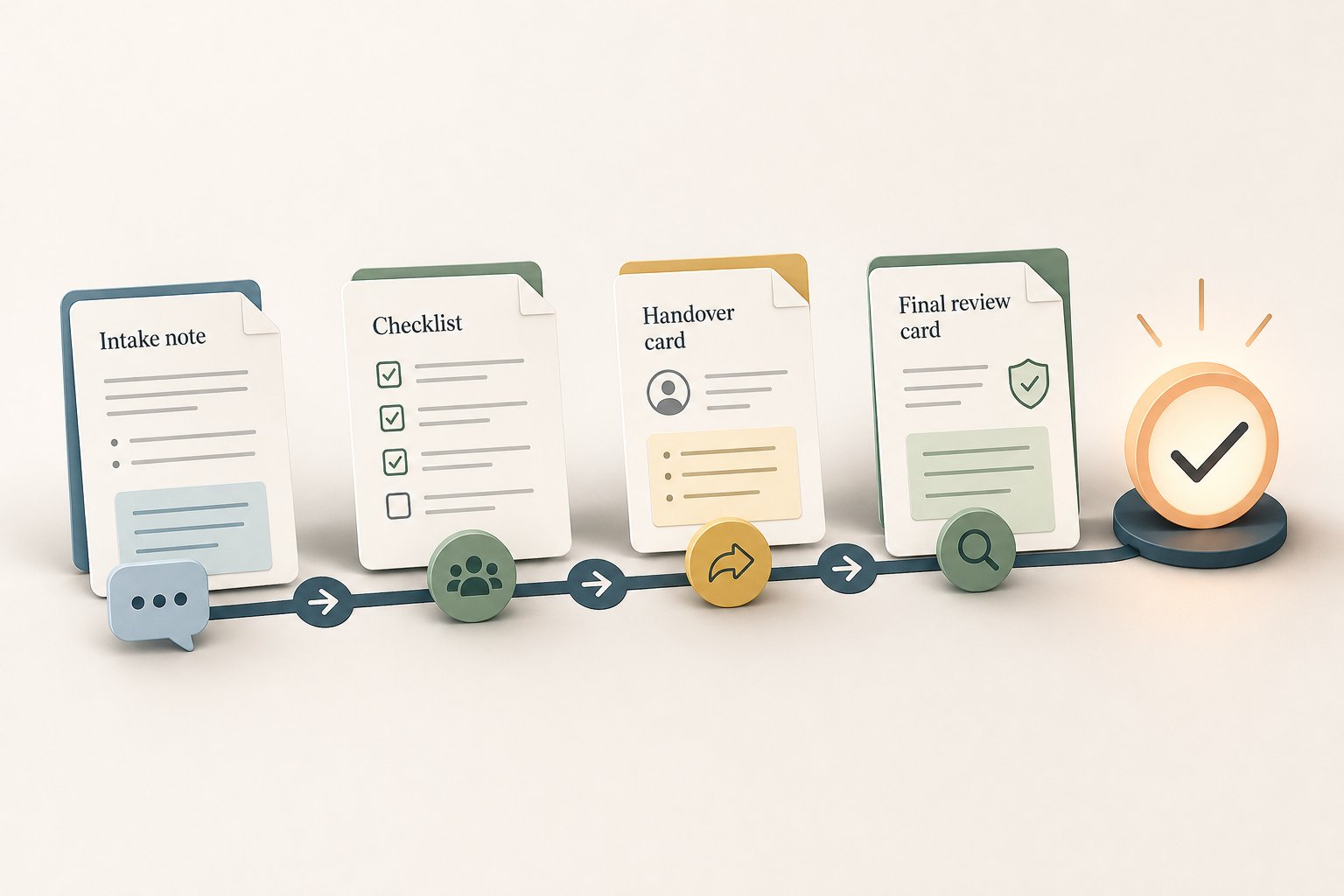

Crafting a clear AI strategy is essential for SMEs aiming to harness artificial intelligence effectively. Without a well-organised approach, investments risk remaining experimental rather than operational tools driving measurable business value. This article outlines a step-by-step framework to design a practical, business-focused AI strategy. It navigates you through readiness assessment, opportunity identification, prioritisation, governance, implementation planning, and performance measurement to ensure your AI initiatives deliver lasting ROI and scale over time.
Understanding the critical elements upfront empowers you to start small, deliver clear value, and expand AI use confidently with the right controls and insights.
Establish Your AI Readiness
Before exploring AI solutions, assess your current position within your organisation.
Evaluate Data Assets
Practical AI depends on accessible and relevant data. Identify available data sources, their quality, and integration capabilities. Do your teams capture accurate customer information, sales figures, or operational metrics routinely? Determine if existing systems connect smoothly or require improved data flows.
Assess Technology Infrastructure
Review your core digital environment. Can your current IT systems support AI tools and connected systems? Check compatibility with AI assistants, automation platforms, or custom applications. A scalable infrastructure reduces future obstacles and supports incremental AI adoption.
Gauge Team Expertise and Mindset
Consider staff familiarity with AI concepts and openness to change. Engage leadership and operational teams through interviews or workshops to understand knowledge gaps and potential adoption challenges. Preparing your people is vital for embedding AI in daily workflows.
Identify Practical AI Opportunities Across Your Business
Explore the areas where AI can gain the most measurable benefit.
Conduct Process Reviews
Map existing workflows in finance, marketing, sales, customer support, or logistics. Identify repetitive, manual, or data-intensive tasks that currently burden your teams. These processes are prime candidates for AI automation or assistance.
Use Team Interviews
Involve frontline employees and managers in discussions to uncover pain points and ideas for improvement. These insights help reveal "pain-to-gain" opportunities that may not surface through data alone.
Focus on Cross-Functional Benefits
AI gains often come when improving how people, systems, and decisions work together. For example, connecting sales forecasting with inventory management can reduce delays and improve cash flow visibility.
Prioritise AI Use Cases by Commercial Impact and Feasibility
Not every AI opportunity should be pursued immediately. Apply a practical method to decide where to focus first.
Score Opportunities on Three Criteria:
- Commercial Impact: What measurable business outcome will the AI solution influence? (e.g., reduce reporting time by 40%, increase lead conversion by 10%)
- Ease of Implementation: Are the required data, technology, and skills readily available?
- Team Readiness: Will users adopt and benefit from the solution without excessive change effort?
Balance Quick Wins with Scalable Initiatives
Prioritise use cases that deliver tangible value and can scale over time. Starting small with connected systems or AI assistants on defined tasks builds confidence and momentum.
Define Clear AI Governance and Risk Controls
Establishing governance safeguards your AI usage and aligns it with business goals.
Assign Responsibility
Designate a business owner or AI lead working across IT, compliance, and operations to oversee AI initiatives and maintain accountability.
Create Guidelines for Data Privacy and Security
Ensure AI applications comply with data protection standards, particularly when handling customer or employee information. This reduces exposure to risks around consent and misuse.
Set Ethical Boundaries
Clarify acceptable AI behaviours and decision limits, especially where AI impacts customers or staff directly. Transparency encourages trust and confident adoption.
Develop Your AI Implementation Roadmap
Turn identified priorities and governance plans into an achievable timeline.
Plan Phased Deployments
Outline stages starting with AI opportunity workshops, pilot solution development, user training, and continuous support. Allow for feedback loops and process adjustments throughout.
Coordinate Technology and People
Schedule system integrations, automation rollouts, and connected AI assistants alongside tailored training sessions. Ensuring parallel progress both technically and culturally smooths adoption.
Define Regular Reviews
Integrate quarterly reviews to assess progress, adapt priorities, and identify next opportunities. This approach prevents stagnation and encourages ongoing measurable impact.
Select Key KPIs to Track AI Performance and ROI
Measurement focuses your efforts and makes the business case clear.
Choose Relevant Metrics
Depending on use case, these could include time saved on admin tasks, reduction in error rates, increased sales conversion, improved cash flow visibility, or team adoption rates.
Establish Baselines
Record current performance levels before AI implementation to quantify improvements reliably.
Monitor and Report
Create dashboards or regular reports accessible to stakeholders. Transparency fosters accountability and continuous improvement.
Example: Improving Financial Operations with AI
A mid-sized SME identified late invoice processing as a bottleneck affecting cash flow. Through an AI discovery workshop, they mapped this process and prioritised developing a custom AI assistant to automatically extract invoice data and flag urgent payments.
A phased rollout began with a pilot covering one client segment. Within three months, invoice processing time fell by 50%, and overdue payments decreased by 15%. The finance team received tailored training, enabling quicker adoption. Ongoing quarterly reviews identified new automation opportunities, scaling the impact.
This example shows how starting with a focused, practical AI use case delivers measurable ROI while setting a foundation for broader AI adoption across the business.
Bringing It All Together
Creating a practical AI strategy starts with a clear readiness assessment and comprehensive opportunity identification across your SME. Prioritising use cases based on measurable impact and ease of adoption ensures resources focus on the solutions that drive real business value.
Establishing effective governance and an implementation roadmap aligned with your team’s capabilities creates confidence and supports sustainable adoption. Tracking KPIs and ROI regularly keeps AI initiatives accountable and helps scale success over time.
Glossary of Technical Terms:
- AI Assistant: An application that automates or supports specific business tasks using AI technologies.
- Custom GPT: Bespoke AI language models tailored to business needs.
- Connected Systems: Integrated digital tools and platforms that share data and automate workflows.
- Automation: Using technology to perform repetitive tasks without human intervention. - AI Roadmap: A planned sequence of AI initiatives and projects aligned with business priorities.
- Opportunity Prioritisation: The process of ranking AI use cases based on impact, feasibility, and readiness. - Governance: Frameworks and policies managing AI use risks and responsibilities.
- KPIs (Key Performance Indicators): Metrics used to measure the success and impact of AI initiatives.
- ROI (Return on Investment): The financial benefit gained from AI relative to its cost.
- Process Review: An analysis of current workflows to identify improvement points for AI use.
- Adoption: The rate and quality of integrating AI tools into daily business operations.
- Quarterly Review: Scheduled evaluations of AI progress and outcomes every three months.