Most SMEs do not need a wall of AI ideas. They need a clear answer to a simpler question: where should AI sit inside the business so it saves time, improves decision-making, and creates capacity for growth without adding noise? A good AI consultancy starts there, then works backwards through the processes, data and people involved.
For Hally AI, that means the work is not just about recommending a tool. It is about helping you identify a practical AI opportunity, design the right internal system around it, and support implementation in a way that fits how your business already operates. That is the difference between an interesting pilot and something your team can actually use.
Why SMEs need more than tool recommendations
A tool recommendation on its own usually skips the part that matters most: whether the business problem is ready for automation, augmentation or neither. Internal systems in SMEs are rarely neat. Work may sit across spreadsheets, inboxes, shared drives and people’s heads. If you jump straight to software, you often end up automating a messy process instead of improving it.
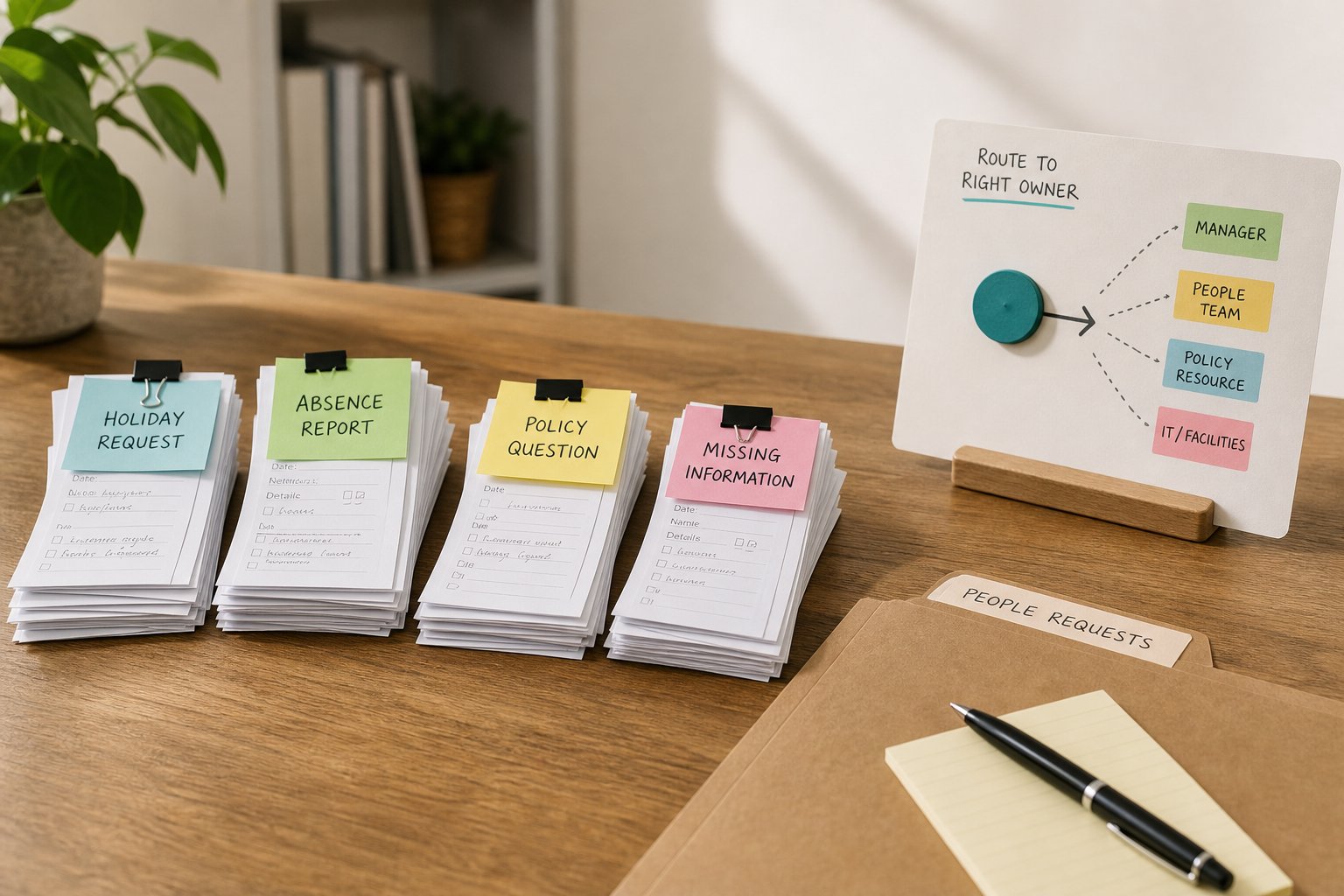
That is why an effective AI consultancy for SMEs should begin with the operational reality. The consultancy should ask what is slowing the team down, where decisions are delayed, and which tasks consume time without adding much value. It should also be honest about what AI should not touch yet. Sometimes the best answer is process clarity, better data discipline or a simpler workflow before any system is built.
This is especially important for SMEs because internal systems tend to serve a small number of people across several roles. A change that looks minor on paper can affect sales, operations, finance and customer service at the same time. Practical design has to account for that overlap.
What a good AI opportunity assessment should cover
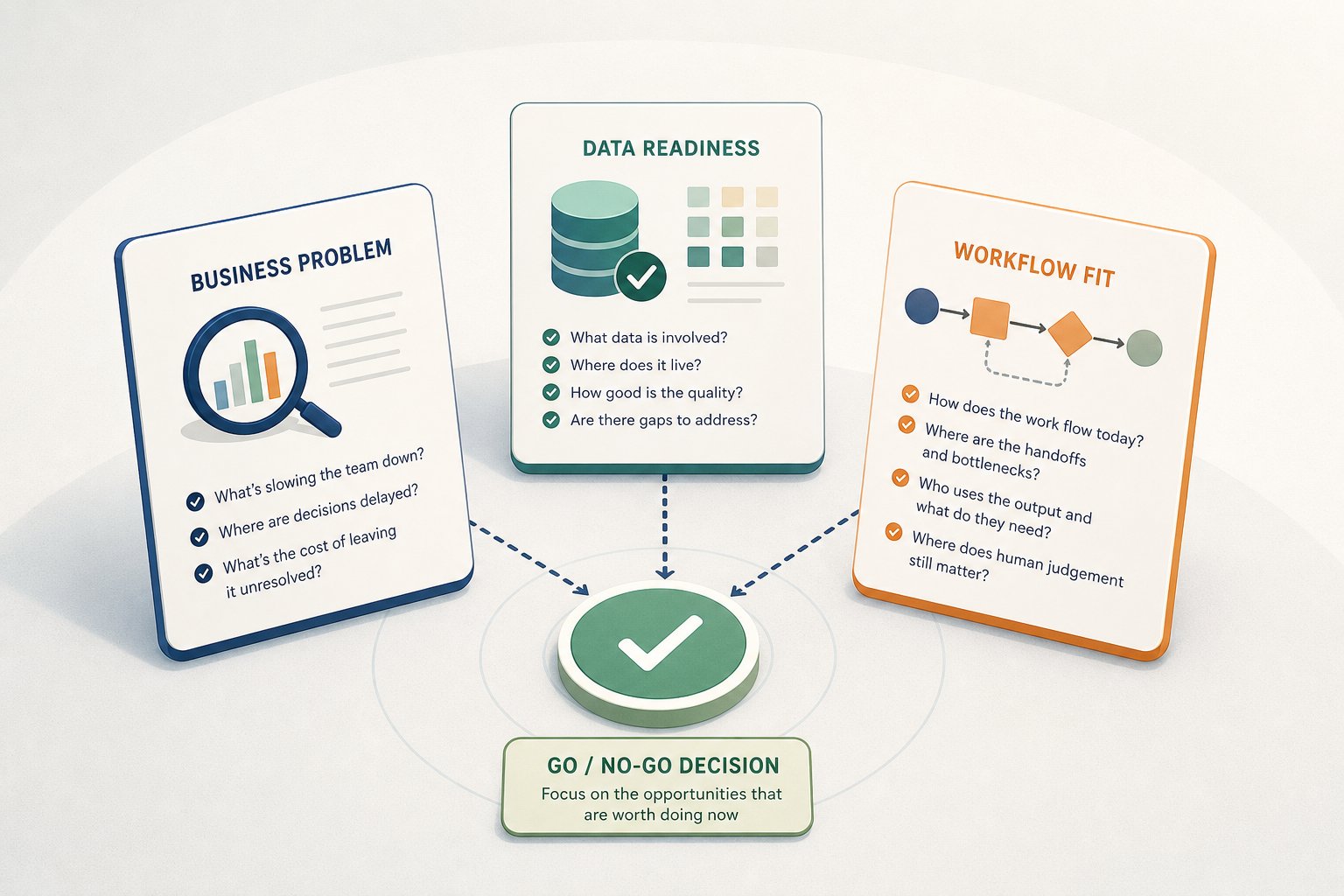
A useful assessment should do more than generate ideas. It should narrow the field to the opportunities that are commercially worth exploring and operationally realistic to deliver.
At a minimum, the assessment should look at:
- the business problem and the cost of leaving it unresolved
- the current process, including handoffs, bottlenecks and repeated manual steps
- the quality and location of the data involved
- who will use the system, and what they need from it
- where human judgement still matters
- what success would look like in day-to-day work, not just in theory
That review should produce decisions, not just observations. For example, it may show that a reporting task can be partially automated, while a customer-facing recommendation still needs human review. Or it may show that the value lies less in full automation and more in faster triage, better drafting or more consistent internal decision support.
A good assessment also helps you avoid vague ambition. If a consultancy cannot explain which process it is improving, what data it needs, and why the use case is worth pursuing now, the engagement is probably too loose.
How design work connects data, people and workflows
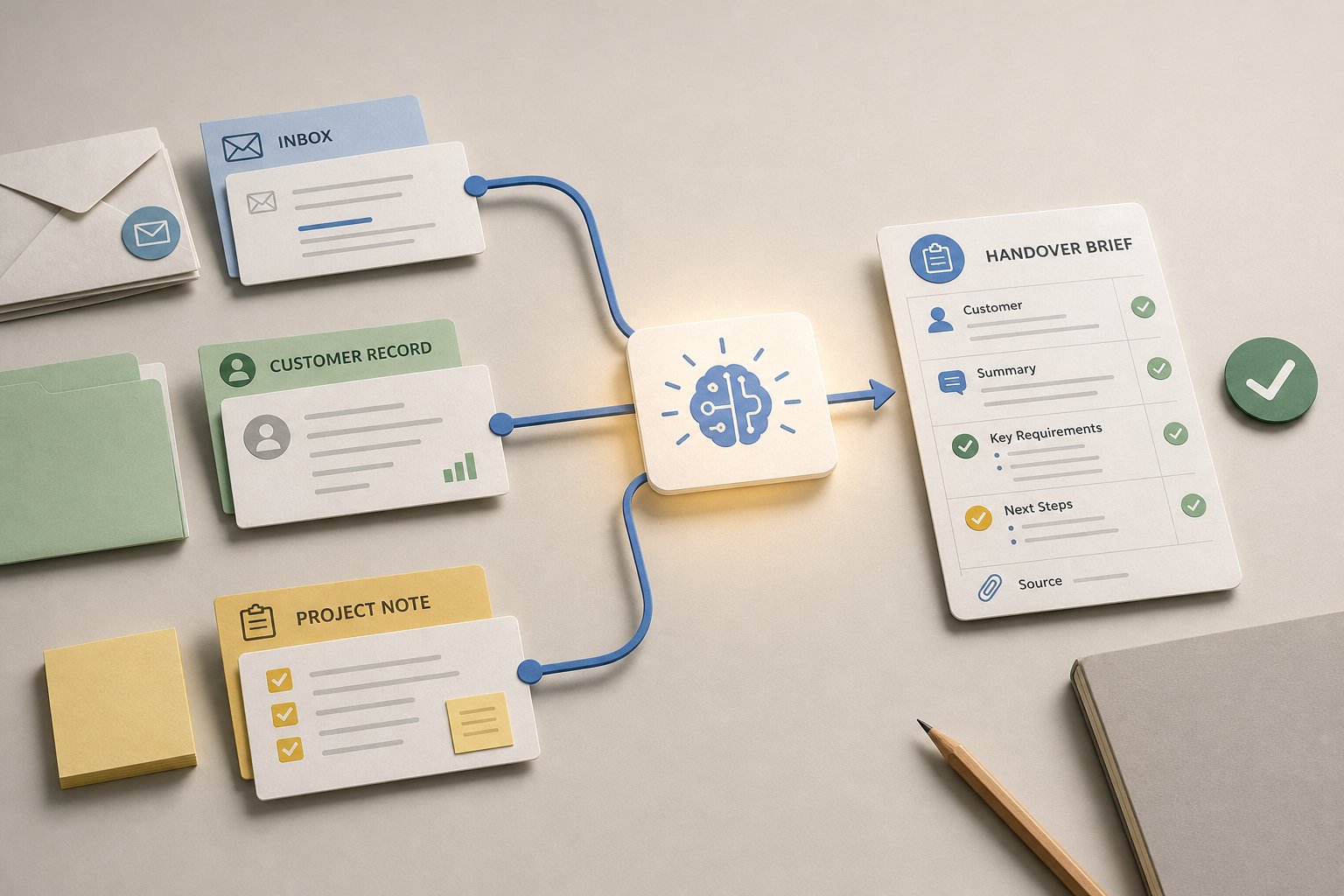
Design is where an AI project becomes a working internal system. This is the stage that should connect the business process, the data source, the users and the decision points into one workable flow.
In practice, that means asking questions such as: Where does the input come from? Who checks it? What happens when the system is uncertain? Who gets the output, and in what format? If the consultancy cannot map those steps, the system may be technically impressive but awkward to run.
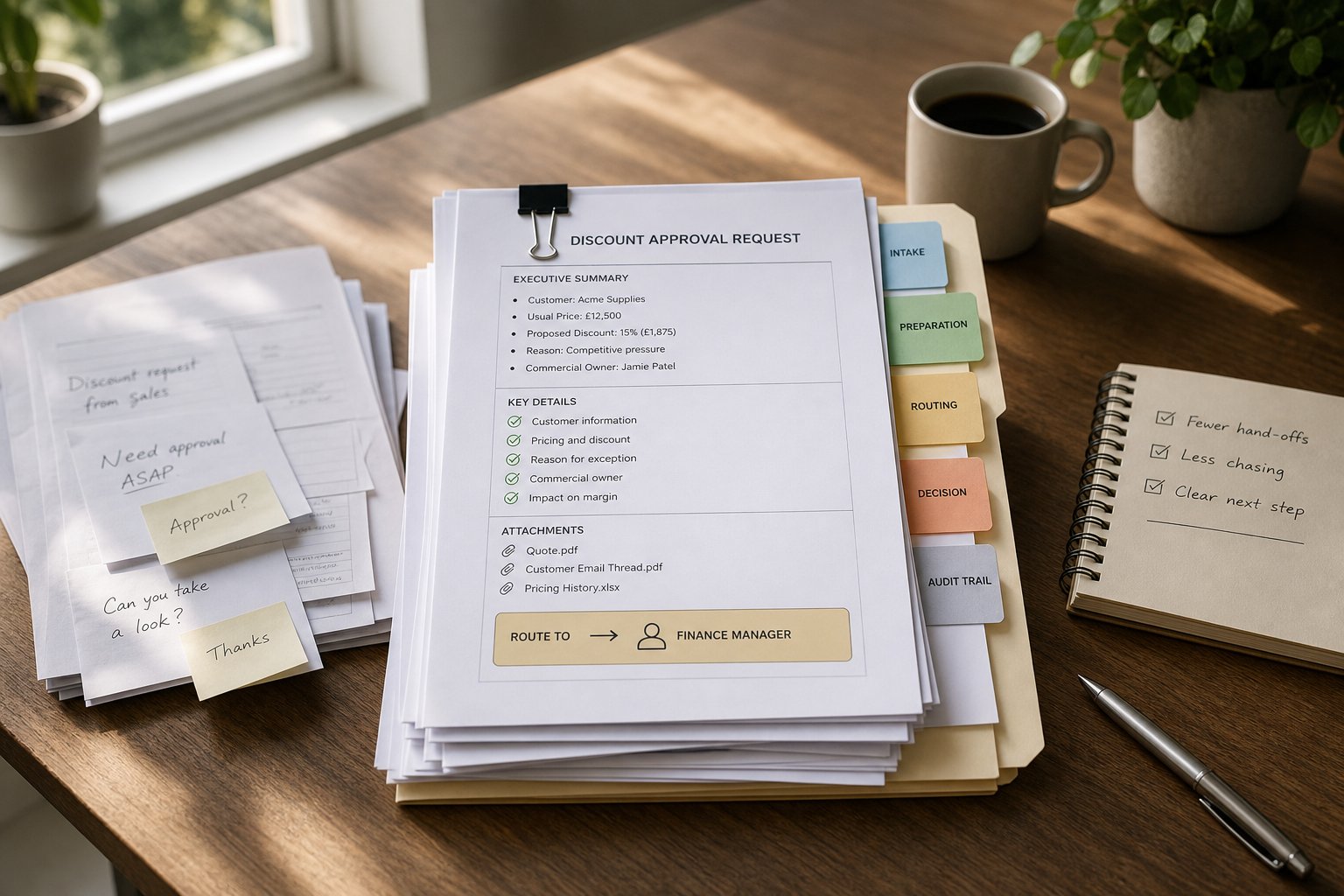
For SMEs, this matters because internal systems rarely fail for one big reason. They fail when the design ignores everyday behaviour. A system that saves 20 minutes but creates a confusing approval step may not be adopted. A dashboard that gives more data but no clear next action may not improve decision-making. Practical design reduces that friction.
A useful design phase should also reflect what the business can support internally. If your team does not have the time or capability to manage a complex setup, the consultancy should design for simplicity and maintainability. In other words, the system should fit the business, not force the business to reorganise around the system.
What implementation support should look like
Implementation support is where a serious consultancy earns its keep. This is not just a handover of documents or a one-off build. It should include the support needed to move from design into real use.
That usually means:
- building or configuring the solution
- testing it against real workflows
- fixing issues before wider rollout
- training the people who will use it
- defining ownership, review points and escalation paths
- supporting adoption after launch, not only at launch
The main value of implementation support is risk reduction. It lowers the chance that the system sits unused, breaks a workflow, or creates more admin than it removes. It also speeds up adoption because people can see how the new process works in their own context, not in a generic demo.
For SMEs, this stage should be practical and paced. There is little value in overengineering a first version. A good consultancy should help you start with the smallest useful version, then improve it once the team has used it in real conditions.
How to define measurable value before starting
If a consultancy cannot help you define value before the work begins, it is harder to tell whether the project has delivered anything useful. Measurable value does not have to mean a large-scale financial model. It does need to be specific enough to judge.
A sensible starting point is to agree what will change if the system works. That might be fewer hours spent on a recurring task, quicker turnaround on a decision, fewer manual errors, or more consistent outputs across the team. In some cases, the value is capacity. The system frees people to do higher-value work instead of repetitive admin.
The key is to define the measure in business terms. “Better use of AI” is not enough. “Reduce the time spent preparing weekly reports” is clearer. “Improve decision-making” becomes more useful when it is tied to a faster, more reliable review process.
It also helps to agree what success will not look like. Some projects will not replace a process entirely. Some will improve one part of a workflow rather than the whole thing. Being clear about the boundary keeps expectations sensible and makes the decision to proceed much easier.
The kind of partner that makes decisions easier
The best AI consultancy should reduce uncertainty, not add to it. It should help you decide where AI creates measurable value, where it does not, and what needs to happen before implementation is worth funding. That is the practical role of assessment, design and support when they are done properly.
For SMEs, that approach is usually more useful than a broad promise of transformation. It keeps the focus on the business problem, the internal workflow and the outcome you actually need.
If you are considering AI for one of your internal systems, the right next step is a conversation about the process, the data and the decision you want to improve. From there, a focused assessment can show whether there is a practical opportunity worth pursuing.